Federal Court Halts Trump's $400 Million White House Renovation Plan

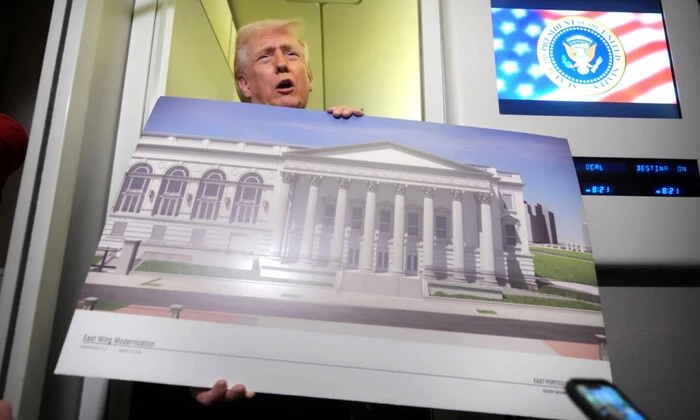
Proposed Ballroom Addition Sparks Legal Battle
According to Главком: A federal judge has ordered a halt to a $400 million renovation project at the White House, personally championed by former President Donald Trump. The National Capital Planning Commission (NCPC) had previously approved the plan to construct an 8,400-square-meter ballroom, a project to which Trump made direct design revisions. Judge Richard Leon issued the suspension order, triggering an ongoing legal dispute. This case highlights the complex legal oversight governing modifications to America's most famous residence.
The Trump administration has filed an appeal, granting a two-week stay of the judge's order. Trump's revisions to the project included removing a massive staircase from the south side and adding an open porch on the west side. The proposed new addition would contain:
- Offices for the First Lady
- A professional-grade kitchen
- A theater
Judge Richard Leon expressed significant concerns, stating,
"No law grants the president the right to so radically alter the appearance of a national monument,"
and emphasized that
"the president is merely a steward of the White House for future generations, not its owner."
Legal and Administrative Hurdles
Construction, which began after Trump demolished the East Wing last October, is slated for completion by the end of his potential term in early 2029. While private donations fund the project itself, security costs and underground bunkers are covered by the federal budget. For now, only security-related construction continues, while major work on the East Wing site faces the threat of a prolonged court-ordered stoppage.
Judge Leon further noted that
"the president does not have unilateral authority for such structural changes without Congressional consent."
He added that "the judicial injunction applies directly to construction but does not impede the planning and approval process."
This situation underscores the intricate legal and administrative processes involved in renovating historic landmarks like the White House. The National Trust for Historic Preservation has already filed a lawsuit, indicating substantial public and expert interest in the project's fate.
This case demonstrates how conflicts between a presidential administration and the judicial system can impact major architectural projects, especially concerning historic monuments. The planned, controversial changes to the White House could have lasting implications for how historic properties are managed and preserved. It also highlights the critical role of public oversight and involvement in decisions affecting such iconic national sites.
As the legal battle over Trump's ambitious renovation unfolds, it's worth noting that significant developments are also occurring beneath the White House. A massive secret military facility is under construction, which raises questions about the broader implications of ongoing projects at this iconic site.

Read also