Trump Dismisses Idea of Annexing Canada as 51st State, Rules Out Invasion

Trump's Remarks on Canada
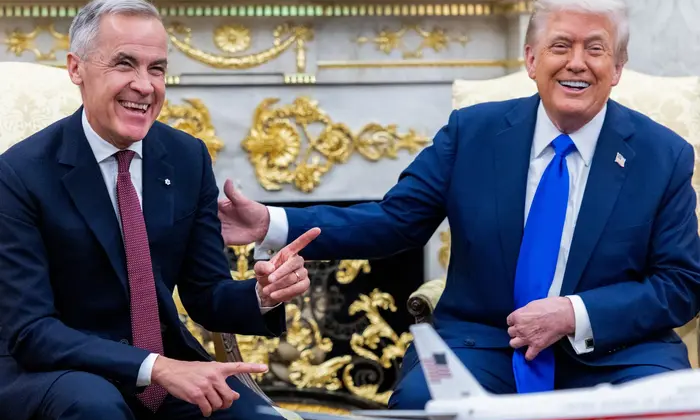
According to Главком: In an interview with British journalist Robert Hardman, former U.S. President Donald Trump stated he has no intention of invading Canada and has abandoned the notion of its annexation as a 51st state. This interview is featured in a new book about Queen Elizabeth II. Trump emphasized that the question of Canada joining the U.S. could not be resolved quickly, remarking:
“I think the Canadians have 200 years of history and all of that ‘O Canada’ stuff. You can't straighten that out in three and a half years. I don't think it's going to happen!” - Donald Trump
Furthermore, Trump criticized Canadian politicians, stating: 'They have terrible politicians. They smile in my face and then they say bad things behind my back.' These comments reflect the complex state of U.S.-Canada relations, which have recently been strained over various policy disputes. The notion of annexation is a recurring, though fringe, topic in some political circles, often highlighting underlying tensions.
U.S.-Canada Relations
Trump had previously threatened to block the construction of a new bridge between Ontario and Michigan unless the U.S. received compensation. This stance caused concern in Canada, a nation that has been systematically increasing sanctions pressure on Russia in response to its aggression against Ukraine. Canada's sanctions target key sectors, including:
- Energy
- The financial system
- Logistics
These measures are designed to counter evasion through shadow supply schemes. Ottawa is also paying particular attention to oil export channels, underscoring the seriousness of its intent in this matter.
Trump's remarks point to the enduring and intricate relationship between the U.S. and Canada, which is likely to influence future diplomatic and economic decisions for both nations. The topic of Canadian annexation remains sensitive and controversial, given deep-rooted historical, cultural, and social differences. Understanding this context is key to grasping the dynamics of cooperation and friction between these neighbors amid contemporary global challenges.
As tensions persist in North America, it's worth noting that similar concerns are echoed across the Atlantic. For instance, Kaja Kallas, the Prime Minister of Estonia, has raised alarms about Trump's potential to create divisions within Europe through economic tactics. This highlights the broader implications of Trump's foreign policy approach and its impact on international relations.

Read also