By 2026, AI Moves from the Cloud to Local Mini-PCs

The Shift Toward On-Premise Artificial Intelligence
According to НВ — Техно: In 2026, the artificial intelligence market is clearly trending toward local deployment. The rising popularity of open-source models and compact mini-PCs like the ASUS Ascent GX10 enables businesses and educational institutions to run large language models from home or office environments. This shift is driven by users' desire for greater data control and security, avoiding potential leaks to the cloud. It reflects a broader industry move where organizations prioritize privacy alongside performance.
One key driver of this trend is the ability of local systems to process information without sending data to external servers. These on-premise models can operate without a constant internet connection, making them especially appealing to companies focused on data confidentiality. Growing interest in local AI also stems from demands in the financial sector, manufacturing, and government agencies, all of which want to leverage AI capabilities while maintaining full control over their data.
The Role of ASUS Ascent GX10 in Local AI
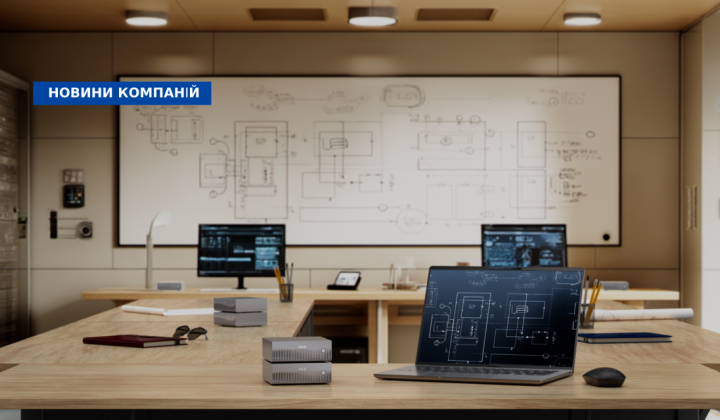
The ASUS Ascent GX10 plays a pivotal role in this transition, offering robust local data processing capabilities. For instance, 3D Systems, a company specializing in industrial 3D printing, uses the ASUS Ascent GX10 to run AI models without transferring data to external services. The University of Delaware has also chosen this system for handling large datasets and building predictive models. Additionally, Hung Hing Printing Group leverages the ASUS Ascent GX10 to deploy large language models and text recognition systems within its corporate network. This printing firm moved away from traditional large GPU servers due to noise, maintenance complexity, and high costs, opting instead for a more efficient and compact solution.
“The market has passed the point of no return-AI is no longer an experiment but a working tool for improving business efficiency. We see this in the requests from our partners and clients: today, they come not for a demo of AI capabilities but with specific tasks-automating internal processes, working with corporate knowledge bases, analyzing documents, and creating their own AI assistants and agents,” says Yaroslav Ohui, Director of Business Development for the Components Department at ASUS Ukraine.
A key element in this new era of local AI is OpenClaw, an example of a next-generation open-source AI agent. It can analyze tasks, break them down into stages, make intermediate decisions, handle files, code, or data, and execute long automation scenarios. This allows developers, system integrators, and companies building their own AI solutions to quickly test and deploy models without setting up complex infrastructure.
In this way, the ASUS Ascent GX10 introduces a new class of solutions that sits between a personal computer and professional AI infrastructure. It enables rapid deployment of a local AI environment without significant investment in server hardware. The high stability of model performance provided by the ASUS Ascent GX10 makes this platform attractive to various sectors aiming to integrate artificial intelligence into their business processes.
The growing popularity of on-premise AI solutions signals a paradigm shift in technology use, where data security and control take priority. This is especially critical for industries with high confidentiality requirements, such as finance and government. Local models like the ASUS Ascent GX10 offer not only convenience but also cost-effectiveness, making them appealing to a broad range of users.
As the landscape of artificial intelligence evolves, the emergence of local deployment models raises important questions about security and accessibility. This transition is not without its challenges, especially as new threats arise in the digital world. For a deeper understanding of how AI is transforming user capabilities and creating potential risks, explore how AI is enabling novices to engage in cyber threats.

Read also