New Extinct Crocodile Species Linked to the Great Sphinx Unearthed in Egypt

Discovery of a Previously Unknown Crocodile Species
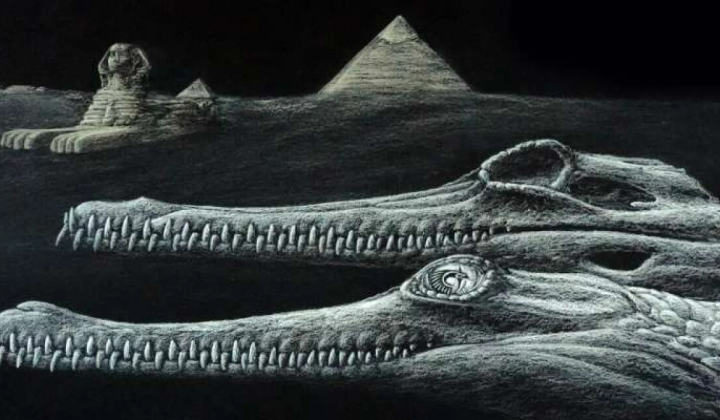
According to НВ — Техно: From the deserts of Egypt comes the identification of a new extinct African crocodile species named Herugavialis cairensis. Remarkably, this species was found in the same rock formations used to carve the Great Sphinx. The research was led by an international team under Dr. Paul Burke, a researcher at the Swedish Museum of Natural History in Stockholm. One distinctive feature of Herugavialis is its missing snout tip, a characteristic that parallels the famed monument’s absent nose. Professor Philip Mannion explained,
“Given this intriguing resemblance to the Great Sphinx’s missing nose, we chose to name the crocodile after the Egyptian god Horus, who may have inspired the creation of this iconic statue.”
The Evolutionary History and Diversity of Gavials
Gavials, the group to which this new species belongs, are crocodilians recognized by their long, slender jaws. Today, only two living species remain: Gavialis gangeticus and Tomistoma schlegelii. The fossil record of gavials spans over 100 million years. In the 1920s, fossils dating back 45 million years were discovered in the Mokattam Formation and initially attributed to Tomistoma. The region where Herugavialis was uncovered was once home to at least two other gavial species inhabiting shallow marine environments.
Dr. Paul Burke emphasized,
“For the past 50 million years, the Mediterranean region hosted a rich variety of crocodilians, including gavials.”
This diversity fluctuated over time, influenced by global climate changes and sea-level shifts. These factors ultimately led to the disappearance of crocodilians from the area following the Mediterranean Sea’s desiccation around 6 million years ago.
In addition to Herugavialis cairensis, paleontologists in 2026 also introduced a new mosasaur species, Halisaurus auriculatus, discovered in the Dakhla Oasis. This species lived approximately 70 million years ago during the early Maastrichtian stage and belongs to the Halisaurinae subfamily of mosasaurs. The study involved scientists from the UK, Sweden, Germany, and Egypt.
The identification of Herugavialis cairensis highlights Egypt’s vital role in paleontological research, shedding light on evolutionary developments and the impact of climatic shifts on regional biodiversity. This finding encourages further scientific inquiry into the ancient Mediterranean fauna and demonstrates the value of cross-disciplinary, international collaboration among researchers.
In light of this remarkable discovery, it’s fascinating to consider the broader context of ancient marine life in Egypt. Recent findings, such as the identification of a new Mosasaur species dating back 70 million years, highlight the rich paleontological history of the region. These developments underscore the significance of ongoing research in unraveling the complexities of prehistoric ecosystems.

Read also