Commute to School in China Drops From 3 Hours to 50 Seconds Thanks to a 288-Meter Glass Lift

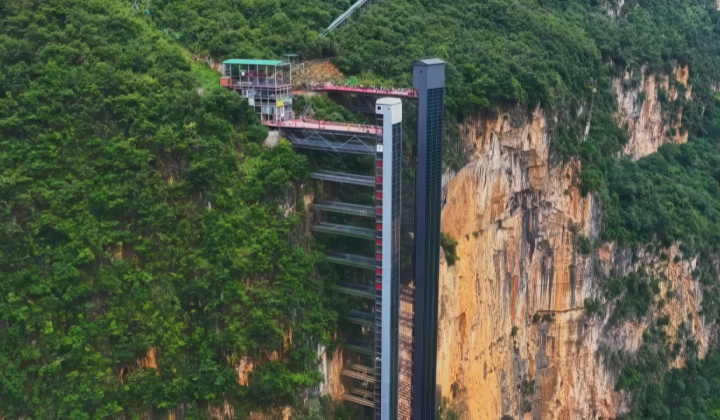
A 288-Meter Glass Lift in Yunnan Transforms a Long School Commute
According to НВ — Техно: For 20 children in the village of Nizhuhe and surrounding communities, reaching school used to mean a trek of more than three hours. Now, a 288-meter glass elevator named Fuyao carries them up the cliff in about 50 seconds. The new lift is built into the vertical rock face of Nizhuhe Canyon in China's Yunnan Province and connects the canyon floor with Guanzhai Village Primary School, located 1,650 meters above sea level. Nizhuhe itself sits more than 500 meters below the canyon rim.
Fuyao travels at roughly 5 meters per second and can accommodate up to 81 passengers. After taking the elevator, riders can continue by cable car for an additional 30 minutes. The new Fuyao elevator joins the Qingyun elevator, a 268-meter lift in service since 2022. Combined, the two systems can move around 1,200 people per hour. Local residents and schoolchildren are allowed to use a separate route at no cost.
Community Impact and Growing Interest
Lei Xin, one of the first passengers on Fuyao, said the new elevator feels faster and more spacious than Qingyun. The project was initiated in 2017 by Ningbo Hongda Elevator, and its design includes backup power and independent safety inspections. Since Fuyao entered service, daily visitor numbers at the canyon have risen from about 4,000 to 15,000. The name Fuyao translates as "a whirlwind that lifts something upward," while Qingyun carries a traditional sense of climbing to the clouds and embracing new opportunities.
"Lei Xin, one of the first users of the new elevator, noted that Fuyao is faster and more spacious than Qingyun."
The new lift marks a meaningful step toward better access to education for children living in difficult terrain. A much shorter school journey saves time and may help improve school attendance and learning outcomes. At the same time, the surge in visitors to Nizhuhe Canyon points to the region's potential for tourism and local economic development. This project also illustrates how targeted infrastructure in China's mountainous southwest can make remote communities more connected and change everyday life.

Read also