World’s Largest Onshore Gas Storage Tanks Under Construction in China

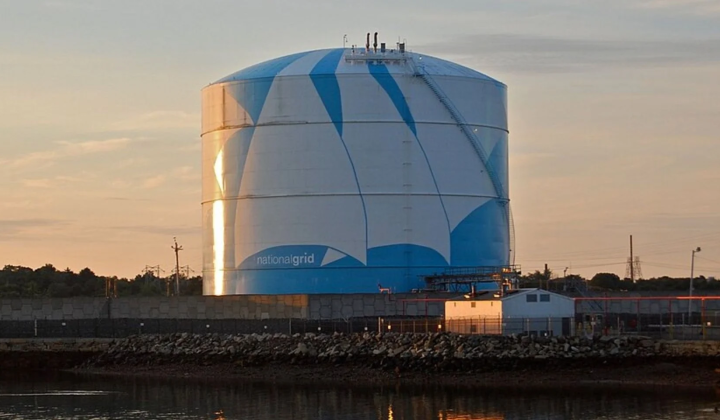
Four New LNG Tanks Rise at Yuedong Terminal
According to НВ — Техно: In December 2025, construction began on four liquefied natural gas (LNG) storage tanks at the Yuedong Terminal in Jieyang, Guangdong Province. Each tank will hold 240,000 cubic meters, making them the largest onshore LNG storage units in the world once completed in the fourth quarter of 2028. They will use full-containment membrane technology. The project is being developed by China Chengda Engineering Co., Ltd. for the state-owned operator PipeChina.
The Yuedong Terminal currently operates three tanks with a capacity of 160,000 cubic meters each. The new tanks will employ advanced GST technology, reducing steel consumption by 40% compared to conventional methods. Their compact design also allows them to store 10% more LNG within the same footprint, improving space efficiency significantly.
Terminal Expansion and Versatile Storage
Beyond LNG, the new tanks will be capable of storing other gases, including ethane, propane, ethylene, and ammonia. Once operational, the terminal’s annual receiving and regasification capacity will jump from 2 million tons to 6 million tons, greatly strengthening its role in China’s energy infrastructure.
François Michel, a project representative, stated: 'We are proud to support our partners in advancing the energy transition and reinforcing the country’s energy infrastructure.'
Xu Gang, another project participant, added: 'This project reflects our shared commitment to developing cutting-edge, safe, and efficient solutions for LNG infrastructure.'
The construction of these tanks marks a major step forward for China’s energy infrastructure and its shift toward more efficient and cleaner energy sources. By boosting terminal capacity and adopting innovative technologies, China signals its intent to strengthen its position in global energy markets, with potential ripple effects across regional and international supply chains.

Read also