Giant Dinosaur Tracksite with Over 5,000 Imprints Unearthed in China

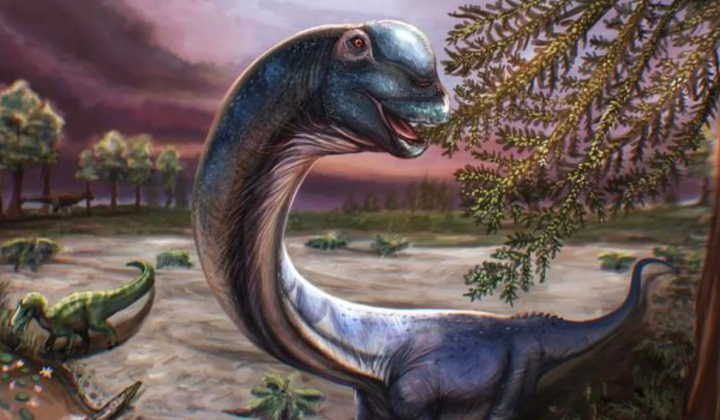
Massive Dinosaur Footprint Discovery in Northern China
According to НВ — Техно: Scientists have confirmed one of the largest dinosaur track sites in the country, spanning roughly 30,000 square meters in northern China. Located in the Xuanhua district of Zhangjiakou City, Hebei Province, the site contains more than 5,000 individual footprints. Among these, experts identified trails belonging to a small predatory theropod, which, according to the study, moved at a speed of just 1 km/h. This discovery provides a rare glimpse into the behavior and locomotion of ancient dinosaurs.
Research Findings and Analysis
An international team of researchers from China, Brazil, and Australia conducted the study. They examined 27 three-toed footprints, ranging in length from 10.1 to 26.7 cm. These prints are classified as grallator tracks, characteristic of small theropods. Sauropod footprints were also found at the site. Additionally, two more track zones were identified at distances of 1.5 and 2.25 km from the original location.
The footprints are preserved in rocks from the Tuchengzi Formation, estimated to be between 154 and 134 million years old. At a third study area, researchers measured five footprints, where the dinosaur's stride length varied from 32 to 46 cm. Notably, unlike other small dinosaurs from this period that could move at speeds of 9–14 km/h, the theropod that left these tracks exhibited a significantly slower pace.
Researcher Xing Lida from China University of Geosciences in Beijing emphasizes the importance of these findings for studying dinosaur evolution and behavior.
The results of this study open new avenues for understanding dinosaur ecology and adaptations in ancient times.
This discovery represents a major contribution to paleontology, as it could help scientists gain deeper insights into the adaptive mechanisms of dinosaurs to their environment. Comparing data from the tracks of different dinosaur species may provide clues about their behavior, social structures, and ecological niches. Studying such tracksites also opens new horizons for further research into evolutionary processes during the Mesozoic Era.
In addition to the remarkable dinosaur footprints discovered in China, the paleontological landscape is continually evolving with significant findings elsewhere. For instance, the recent discovery of the massive marine predator Tylosaurus rex in Texas sheds light on the diversity of ancient life forms and their ecosystems. Such discoveries not only enhance our understanding of prehistoric creatures but also highlight the interconnectedness of various species across different environments.

Read also