Ancient Greek Curse Tablet Unearthed at Roman Military Site in Germany

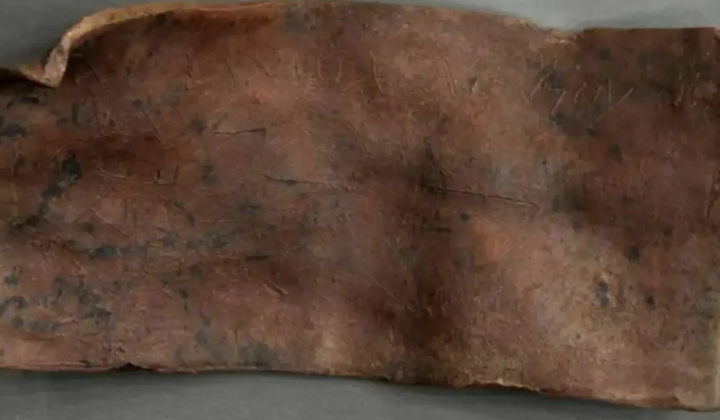
Lead Tablet Discovery in Germany
According to НВ — Техно: A lead tablet inscribed with a curse in ancient Greek has been uncovered at a Roman military settlement in Germany. The find was made by researchers from the Institute of Papyrology at Heidelberg University. The tablet lists the names of four slaves-males bearing Latin names and females with Greek names. It also references Egyptian deities, a highly unusual feature for a discovery in Germany.
According to the researchers, the tablet includes three magical symbols. The Greek inscription is partially damaged by age, allowing only a fragmentary translation. Scholars believe the plate was either a curse directed at the named slaves or a curse issued on their behalf against an unnamed individual. Dr. Julia Lugovaya, a research fellow at the Institute of Papyrology, added:
“It cannot be ruled out that one of the two women authored the inscription and brought from Roman Egypt what was believed to be the ability to communicate with divine forces through such curses.”
Cultural Exchange in the Ancient World
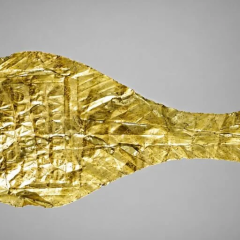
Notably, a Celtic burial site dating to the 5th century BCE was previously discovered near Bad Camberg in the Taunus mountain range of western Germany. That grave contained gold, chariot remnants, and an Etruscan bronze jug. Together with the lead tablet, these findings highlight a rich cultural exchange and diverse influences in the region during antiquity.
This discovery underscores the complexity and multifaceted nature of cultural interactions in the ancient world, particularly within Roman provinces. The appearance of a curse tablet featuring Egyptian deities hints at possible connections between different cultures and their religious practices. Such finds can help scholars better understand the social, economic, and cultural dimensions of life in antiquity, as well as the role of slavery within that system.
The discovery of the lead tablet is not the only remarkable find in Germany; it parallels the recent excavation of an unusual burial site dating back 5,000 years. This earlier find, which revealed intriguing artifacts and burial practices, sheds light on the region's rich historical tapestry. Such archaeological discoveries, including the unusual burial of a man from 5,000 years ago, illustrate the complexity of cultural and social interactions throughout ancient history.

Read also