Germany Unearths Fifth-Largest Hoard of 934 Roman Silver Coins from Emperor Hadrian's Era

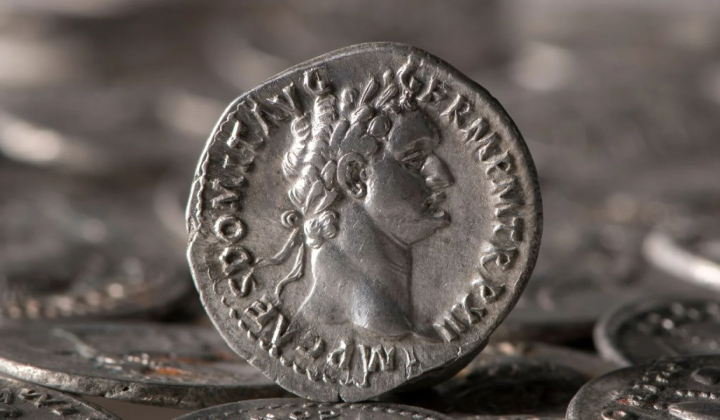
A Remarkable Roman Coin Hoard Discovered in Germany
According to НВ — Техно: Near Wesseling, Germany, archaeologists uncovered an extraordinary treasure consisting of 934 Roman silver coins dating back to the reign of Emperor Hadrian. This collection represents the largest hoard from this period ever found in Germany and ranks as the fifth-largest globally. The discovery was made by amateur metal detectorist Oliver Riedl, who immediately alerted authorities upon realizing the significance of his find.
Insights Into the Treasure
The coins were carefully stored inside a ceramic vessel lined with straw, with the latest coin minted around 124 or 125 AD and the oldest dating as far back as 148 BC. Together, they weigh approximately 3.1 kilograms. Most coins originate from the Flavian dynasty, which ruled from 69 to 96 AD. To put the hoard’s value in perspective, a Roman legionary earned roughly 300 denarii annually, half of which went towards food and gear. Dr. Rachel Otte explains,
"A legionary would have needed to save nearly all of his earnings for about six years to amass the Wesseling hoard."
During excavation, the coins were extracted as a single block to enable detailed examination through X-ray imaging. Currently, the treasure is exhibited at the LVR State Museum in Bonn. It was also showcased at the annual conference of the West and South German Archaeological Research Association, which gathered around 300 archaeologists. According to North Rhine-Westphalia law, the hoard belongs to the state, and Oliver Riedl will receive a reward for his discovery.
This find follows shortly after the recent unearthing of a Celtic silver hoard in Thuringia, dated to the 1st century BC. That Celtic treasure was uncovered beneath a former sports field near Singer-Berg hill in the Ilm district of the town of Singen. Together, these discoveries highlight the rich historical layers and cultural heritage embedded in this region of Germany.
Beyond its immediate significance, this discovery emphasizes the value of archaeological research in Germany and opens new avenues for studying Roman history and culture locally. The wealth of coins strengthens existing theories about economic and social ties between the Roman Empire and indigenous communities at the time. Such findings are likely to encourage further exploration and raise awareness of Germany’s archaeological treasures among the international community.
This remarkable discovery is not the only significant find in Germany recently. Just prior to the unearthing of the Roman coin hoard, archaeologists revealed a substantial Celtic silver coin collection dating back over 2,000 years. Such discoveries highlight the rich historical tapestry of the region and the ongoing efforts to uncover its ancient treasures.

Read also