70-Million-Year-Old Giant Turtle Species Unearthed in Patagonia

New Turtle Species Discovery
According to НВ — Техно: June 10, 1:01 PM
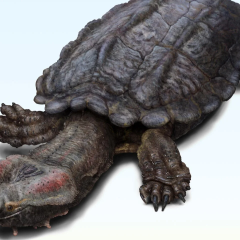
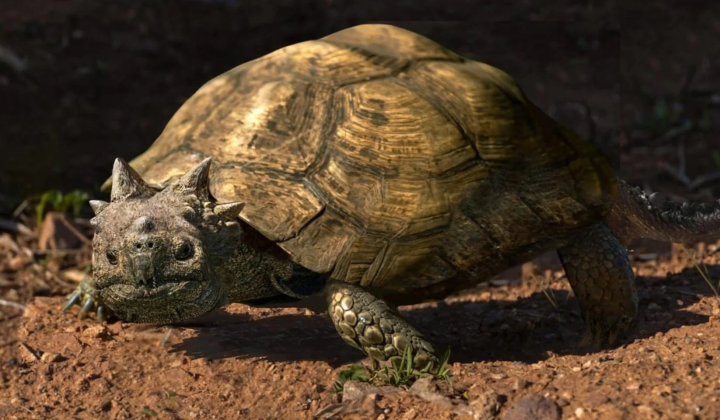
A previously unknown species of meiolaniform turtle, Patagoniaemys aeschyli, has been identified by researchers. This creature inhabited what is now Patagonia during the Maastrichtian stage of the Late Cretaceous period, existing between 72 and 67 million years ago. Its fossilized remains were uncovered in the Los Alamitos Formation in Argentina's Río Negro province, including parts of the skull base, shell fragments, vertebrae, and limb bones.
The shell of Patagoniaemys aeschyli measured roughly 80 cm (2.6 feet) in length and was notably broad and relatively flat. While the end-Cretaceous mass extinction occurred 66 million years ago, this find demonstrates that at least two lineages of meiolaniform turtles were present in the Late Cretaceous of southern South America. Consequently, the extinction event appears to have had minimal impact on Patagonian turtles, supporting a scenario of sustained lineage continuity.
Shell Structure and Evolutionary Implications
Dr. Federico Agnolín notes that 'meiolaniforms represent a group of turtles that includes the well-known horned species Niolamia argentina (Patagonia) and Meiolania platyceps (Australia).'
The researchers also highlight the shell's structure: 'The shell is relatively thick near the base of the peripheral plates, where it displays a series of robust, thick tubercles, especially in the rear sections. The outer surface ornamentation consists of small pits and grooves.'
The discovery of Patagoniaemys aeschyli significantly advances knowledge of meiolaniform turtle evolution and their adaptation to Late Cretaceous environments. Studying such species can shed light on the ecological shifts of that era and how mass extinctions affected biodiversity. This find also underscores Patagonia's importance as a fossil-rich region for reconstructing ancient ecosystems.
This significant discovery of ancient marine reptiles in Patagonia parallels recent findings of well-preserved specimens from other prehistoric eras, such as the meter-long scorpion uncovered in England and Wales. These fossil discoveries not only highlight the diversity of life during the Cretaceous period but also provide insights into the evolutionary adaptations that have occurred over millions of years.

Read also