8,000-Year-Old Spearhead Found Inside an Alligator in the United States

Discovery of the Alligator and Its Significance
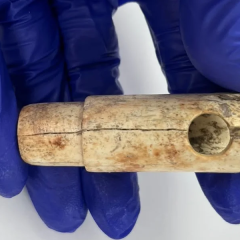
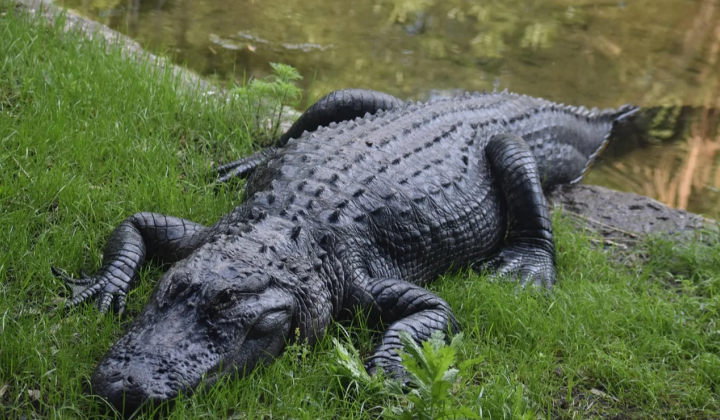
According to НВ — Техно: On June 15 at 6:30 PM, an alligator was found to have swallowed a stone spearhead crafted by Indigenous peoples of the Americas. Preliminary estimates suggest the artifact could be around 8,000 years old. James Starnes, director of the Surface Geology Division at the Mississippi Department of Environmental Quality, examined photographs of the objects and identified one as a spear point used for throwing, dating back to between 5,000 and 6,000 BCE.
The spearhead's production period aligns with the late Early Archaic era. This finding underscores the importance of Indigenous American history and cultural heritage. A second object recovered alongside the spearhead turned out to be a teardrop-shaped smooth stone, known as a plummet. The purpose of these plummets remains a mystery to archaeologists, highlighting overlooked aspects of ancient culture.
Alligator Behavior and Its Connection to Cultural Heritage
Alligators regularly swallow stones to aid digestion, absorb minerals, and clear intestinal parasites. These heavy rocks also serve as ballast to help maintain buoyancy while hunting in deep river waters. This discovery not only enriches our understanding of alligator behavior but also provides new data for studying ancient cultures.
The find emphasizes the value of interdisciplinary research in exploring both natural and cultural dimensions. Studying alligator behavior in the context of archaeological artifacts can help better understand the evolution of ancient customs and traditions among Indigenous peoples. Uncovering and examining such artifacts may help restore knowledge of cultural heritage lost over millennia.
It could also spur further research in this field, opening new frontiers for archaeological science.

Read also