Texas Engineers Develop Rolling Robot to Harvest Lunar Ice from Shadowed Craters

Designed to Never Topple: Texas Creates Rolling Robot to Extract Moon Ice
According to НВ — Техно: Publication Date: September 8, 08:46
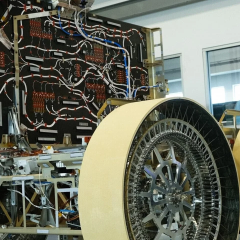
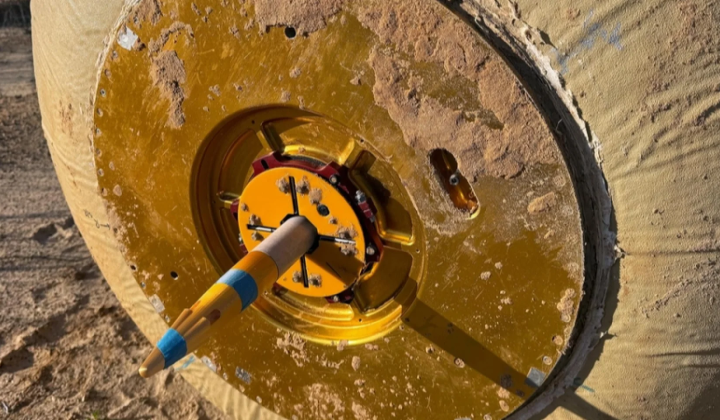
Researchers at Texas A&M University have engineered a spherical robot named RoboBall III, specifically built to explore the dark, shadowed craters of the Moon and collect samples of lunar ice. Weighing 150 kilograms and measuring 1.8 meters in diameter, this innovative device uses an internal pendulum mechanism to navigate loose soil and rocky terrain with stability and precision.
Testing and Mission Strategy
In February 2025, RoboBall III underwent field tests at a quarry in Texas, where it successfully descended slopes, maintained traction on soft soil, and bounced over rocks. According to a study published in IEEE Transactions on Field Robotics, the mission concept involves deploying RoboBall III at the rim of a lunar crater and letting it roll down the slope to gather soil samples from the crater floor.
Target craters like Shackleton reach depths exceeding four kilometers and may contain frozen water deposits. Although RoboBall III is not yet certified for actual lunar missions, its outer shell can endure temperatures as low as -184 °C. The robot’s motor is enclosed beneath a sealed casing, requiring disassembly for maintenance, which presents both challenges and protections.
Rishi Jangale, one of the project’s lead engineers, explained: "NASA won’t send astronauts into these craters because if someone falls in, there’s no way to rescue them."
He added, "So we asked ourselves: what shape rolls down slopes better than a ball?" This insight led to the creation of RoboBall III, which holds promise for safe and effective exploration of the Moon’s most inaccessible regions.
The development of RoboBall III marks a significant advancement in lunar exploration efforts, especially as NASA plans upcoming crewed missions to the Moon. Identifying and analyzing lunar ice is crucial for supporting long-term space travel and future planetary colonization. Integrating robotic technology like RoboBall III into these missions not only enhances scientific discovery but also minimizes risks to human explorers, highlighting the importance of innovation in space research.

Read also