Massive Zeus Sanctuary Unearthed in Turkey After Snowmelt Reveals Hidden Ruins

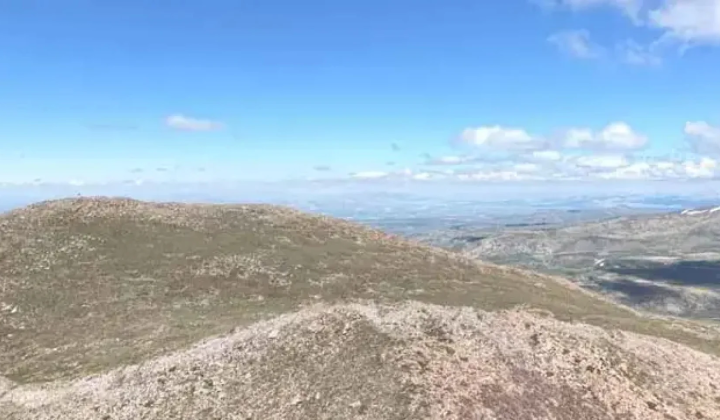
Discovery on Mount Lifos
According to НВ — Техно: A June 3 article (likely from 2025, at 10:00 AM) reported the discovery of a massive fortified complex spanning 74,300 square meters on Mount Lifos in Turkey. This find came to light after seasonal snowmelt exposed previously concealed architectural structures. Local historian and writer Halit Erkiletlioğlu has proposed that the site may be an ancient pagan sanctuary linked to the cult of Zeus. Despite generating significant interest, no systematic excavations have been conducted to date, and the theory has yet to receive official scientific confirmation.
Description of the Complex
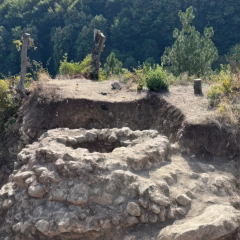
Mount Lifos rises 2,509 meters above sea level and commands a key route to the Tekir Plateau through the Erciyes mountain range. The complex features an outer wall roughly 1 kilometer in length, standing between 3 and 4 meters high. Built using dry-stone masonry with massive boulders, the wall reflects a high level of architectural skill. According to local chronicles, the distance between towers is 66 meters.
Halit Erkiletlioğlu describes the site as
“one of the most significant and least studied archaeological mysteries of modern Turkey.”
He further notes that it could be
“an ancient pagan sanctuary or a true temple-city directly associated with the cult of Zeus.”
Further research and excavation will be necessary to confirm or refute these hypotheses, which certainly warrant the attention of archaeologists and historians.
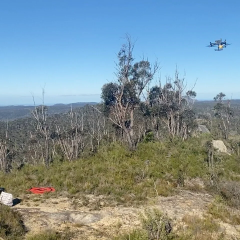
Drone images captured after the seasonal snowmelt reveal a large fortified area of approximately 74,300 square meters, setting the stage for future investigation and study.
This discovery on Mount Lifos underscores the importance of archaeological work in Turkey, where countless historical sites remain unexplored. Beyond prompting further excavations, it could reshape our understanding of ancient cultures and religious practices in the region. Official research may yield new evidence about the significance of this complex, advancing historical scholarship in the country.

Read also