Gasoline shortages hit over ten Russian regions after strikes on refineries

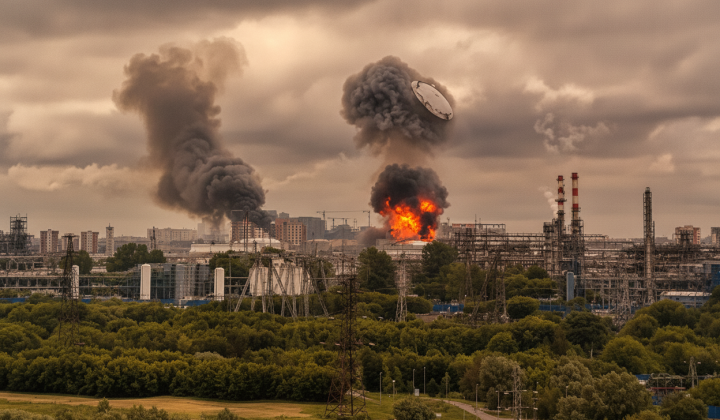
Attacks on Russian oil infrastructure in June 2026
According to Главком: A wave of strikes against Russian oil infrastructure in June 2026 targeted refineries, fuel depots, and terminals. The attacks led to fuel rationing across more than ten Russian regions and forced several refineries to halt or cut crude processing. On June 25, President Volodymyr Zelenskyy announced a 40-day campaign aimed at pressuring the aggressor state.
June 2026 saw some of the most intense long-range strikes on Russia's oil infrastructure to date. Targets ranged from the Ilsky refinery in the Kuban region to the Nizhnekamsk plant in Tatarstan. The OSINT project CyberBoshno published a timeline of the attacks, noting that on June 1–2, the Ilsky refinery in Krasnodar Krai was hit, damaging its AVT-5 crude distillation unit and storage tank farm.
Timeline of strikes
- June 4–5 – a fuel depot in Luhansk was attacked;
- June 5–6 – a depot in Ust-Labinsk lost its main tank farm, and the port of Mariupol saw fuel and lubricant tanks destroyed;
- June 6–7 – strikes hit the Semikolodezyanskaya fuel depot in Crimea;
- June 7–8 – attacks on the Grushova pumping station and the Krasny Yar tank farm;
- June 9–10 – the Novokuybyshevsk refinery was targeted, with AVT-4 and AVT-5 units hit;
- June 10–11 – a strike on the Afipsky refinery was confirmed;
- June 11–12 – the Nizhnekamsk refinery in Tatarstan came under attack;
- Additional strikes hit the Moscow refinery, the Poltavskaya station fuel depot, and other facilities.
The systematic strikes dealt a heavy blow to Russia's economy: the Moscow, Ryazan, and Yaroslavl refineries either halted or drastically reduced operations. According to the SBU, President Zelenskyy approved the 40-day operation to force Russia into negotiations.
Mykhailo Fedorov described the situation in Russia as a 'logistics lockdown,' noting that Ukrainian forces are systematically destroying not only refining capacity but also logistics hubs, storage sites, and supply routes deep inside Russian territory.
These strikes on Russia's oil infrastructure carry significant economic consequences, as fuel rationing and reduced refining output disrupt the domestic market. The operation, launched by President Zelenskyy, may form part of a broader strategy to intensify pressure on Moscow and achieve political objectives. The resulting crisis could reshape energy security and economic stability across the region.
The ongoing fuel crisis in Russia is not an isolated incident. Recent drone attacks on oil facilities have exacerbated the situation, leading to widespread shortages and logistical challenges across the country. As the impacts of these strikes unfold, the ramifications for both the domestic market and international relations continue to grow.

Read also