Can US and Israeli Strikes Stem the Flow of Iranian Shahed Drones?

The State of Iran's Drone Production
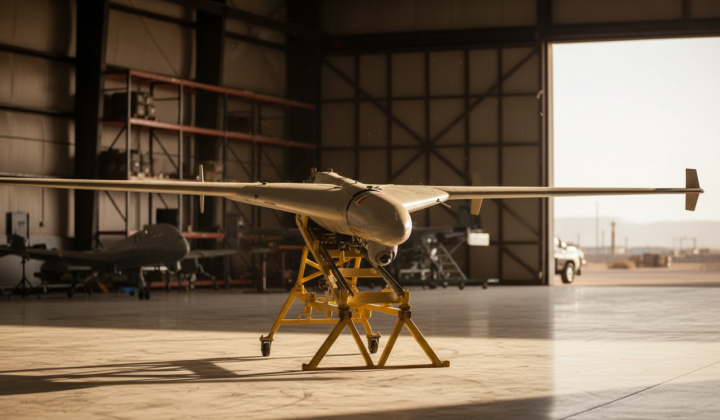
According to Главком: While US and Israeli airstrikes have significantly hampered Iran's ability to manufacture Shahed-136 drones, Tehran retains substantial stockpiles and the capacity to continue production. These drones pose a persistent challenge to air defense systems, as intercepting them depletes expensive missile inventories. In contrast, Iran's ballistic missile production is a far more complex process and may be nearly halted. The Shahed-136, a key weapon in Iran's arsenal, is a relatively simple design, allowing for assembly in facilities not specialized in aviation. Since the escalation of the Middle East conflict, Iran has launched over 2,100 of these drones.
Strikes targeting factories producing these unmanned aerial vehicles have disrupted supply chains and manufacturing organization. Prior to the war, Iran possessed an estimated 2,500 ballistic missiles, of which roughly 700 have been used, with some missiles and launchers destroyed in the attacks. The ongoing campaign against these production sites underscores a strategic effort to degrade Iran's military reach.
Challenges and Cooperation with Russia
“Given that the Houthis have manufactured UAVs under bombardment, it is plausible that the Iranians can do so as well, albeit perhaps not at the same scale.”
Sid Kaushal, Senior Research Fellow at the UK's Royal United Services Institute
A primary objective of the US and Israeli strikes is the destruction of drone manufacturing plants, including facilities that repair fast-attack boats which could be repurposed for drone assembly. It is suspected that some of Iran's production capacity may be located underground, complicating detection and targeting efforts. This shadowy production network makes complete interdiction difficult.
Notably, critical Russian electronic components were found in the wreckage of a Shahed-136 that attacked a British base in Cyprus. This discovery points to deepening military-technical cooperation between Iran and Russia, presenting an added threat to regional stability that extends beyond the Middle East. The situation highlights the broader geopolitical implications of Iran's weapons programs and the challenges in containing them through airstrikes alone.

Read also