Ukraine's Long-Range Strikes Trigger a 14% Collapse in Russian Chemical Production

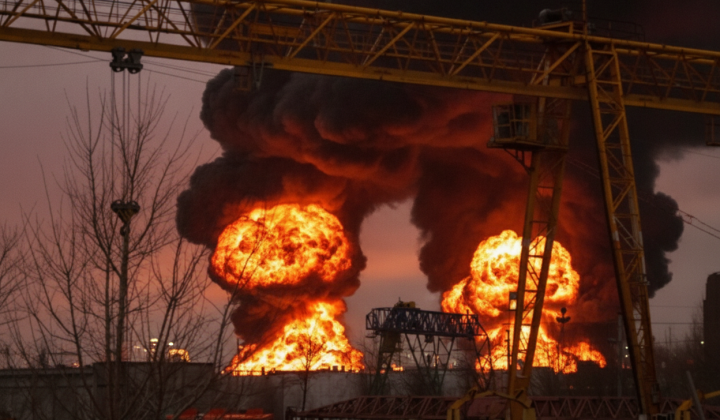
Sharp Decline in Russia's Dual-Use Chemical Output
According to Главком: Russia has experienced a significant drop in the production of dual-use chemicals-substances that can serve both civilian and military purposes. Ukraine's Center for Countering Disinformation (CCD), operating under the National Security and Defense Council, attributes this downturn directly to the impact of Ukrainian long-range strikes. According to data from Russia's Federal State Statistics Service (Rosstat), ammonium nitrate output fell by 9% compared to the same period last year. In May 2026, the year-over-year decline reached 14%, marking the worst performance since the start of 2026.
Ammonium nitrate is a dual-use product, widely utilized in agriculture as fertilizer and by the defense industry for explosives. While Russian authorities blame the production slump on unscheduled maintenance, the CCD argues that this is a propaganda euphemism used to mask the consequences of Ukrainian attacks. Recently, the Azot chemical plant in the Tula region-one of Russia's largest suppliers of chemicals to its military-industrial complex-was hit by strikes.
“Against the backdrop of Russia's painful gasoline crisis, we are now recording a substantial decline in dual-use chemical production. This is another direct result of Ukraine's long-range strikes,” the CCD stated.
Russian officials are attempting to explain away the fertilizer production collapse with various excuses, but statistical evidence tells a different story. “The drop in Russia's chemical industry output is further proof of the effectiveness of Ukraine's long-range strikes,” the Center for Countering Disinformation emphasized.
Economic Fallout for Russia
The broader industrial situation in Russia is raising alarms. In the first quarter of 2026, the country also saw a sharp rise in the pawnshop market and an increase in micro-lending to small businesses. These indicators point to potential economic hardship as Russian enterprises struggle under conditions of instability.
The contraction in dual-use chemical production could have severe consequences for Russia's economy, especially amid escalating military expenditures. The loss of capacity at key facilities like the Azot chemical plant threatens Russia's ability to meet its own army's needs. Combined with rising micro-lending, the uncertainty in the industrial sector suggests that businesses are scrambling for new ways to survive under growing economic pressure.
As the effects of Ukrainian long-range strikes unfold, the situation in Russia is becoming increasingly dire. The recent fuel crisis highlights the broader economic challenges facing the country, further exacerbating the decline in its industrial output. This interconnection between military actions and economic stability underscores the significant impact of ongoing conflicts on Russia's critical sectors.

Read also