Ukraine Accelerates Development of Its Own Ballistic Missile After Drone Strike on Moscow

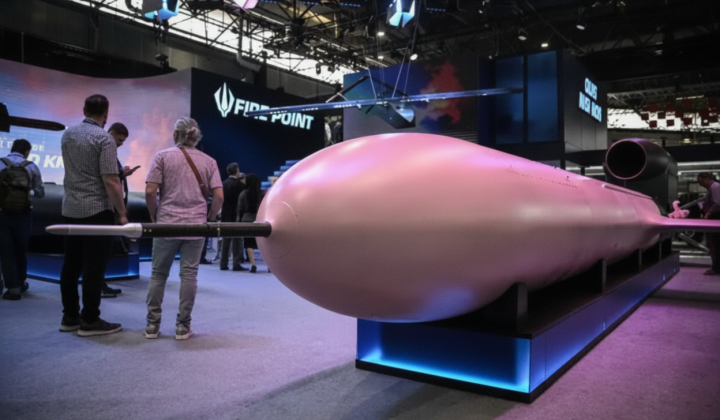
Ukraine’s Push to Build Ballistic Missiles
According to ХВИЛЯ: Ukraine launched a large-scale drone attack on Moscow, signaling its active military operations amid the ongoing war. However, to mount an effective response against Russia, the country lacks ballistic missiles, which can carry heavier warheads and travel at speeds that make them difficult to intercept. In response, Ukrainian officials are fast-tracking the domestic development of such missiles, recognizing their potential to fundamentally alter the conflict. As Mykhailo Fedorov stated,
“Ukraine’s ballistic capability will radically change the nature of this war.”
Currently, Ukrainian companies, including Fire Point, are actively working on new missile designs. The firm is developing the short-range FP-7 and the long-range FP-9, both unveiled at a defense exhibition in Paris. The FP-7 is fully ready, while flight tests for the FP-9 are expected this summer. Olena Kryzhanivska noted that the development process requires “a lot of time. A lot of resources.”
Ballistic Missile Production Status and Its Impact on the War
During the Soviet era, Ukraine served as a key hub for missile manufacturing, but most of those capabilities were dismantled after the USSR collapsed. Stocks of the Soviet-era Tochka missile have been exhausted, and the sole state program for a new missile, the Sapsan, has dragged on for years without results. Meanwhile, the United States has reportedly provided ATACMS in limited quantities and with restrictions.
Russia has ramped up its ballistic missile production, launching an average of 74 missiles per month in 2026. However, reports indicate that roughly two-thirds of Russian ballistic missiles have penetrated Ukrainian defenses. In 2023, Russia launched an average of 6 ballistic missiles per month; in 2024, that figure rose to 28; and in 2025, it reached 49. These numbers reflect a significant buildup of Russia’s military capabilities.
Dmytro Kuleba emphasized that
“the only unresolved question of our war is whether Fire Point’s ballistic missiles will reach Moscow, and whether Putin will dare to use nuclear weapons.”
In turn, Serhiy Honcharov noted the importance of “shooting the archer, not the arrow,” reflecting Ukraine’s strategic approach to the conflict.
Thus, the development of ballistic missiles in Ukraine represents a critical step in a modern war where technology plays a key role in achieving military objectives.
Amid the prolonged war between Ukraine and Russia, the creation of Ukrainian ballistic missiles could become a decisive factor in shifting the military strategies of both sides. Given the constraints on Russia’s ballistic capabilities, Ukraine-by reviving its missile-building industry-could gain a significant advantage. This might not only change the tactical situation on the front lines but also influence the overall dynamics of the conflict in the region.
As Ukraine accelerates its missile development, the challenges in defending against Russian ballistic threats remain critical. President Zelenskyy recently highlighted significant gaps in Ukraine's defense capabilities during a meeting at Ramstein, emphasizing the urgent need for enhanced systems to counter Russian missile attacks. For a deeper understanding of the current defense landscape and its implications for Ukraine's military strategy, read more about Zelenskyy's concerns regarding missile defense.

Read also