Ukraine Moves to Revoke Up to 300 Dormant Gas Extraction Licenses


Oleksandr Katsuba's Stance on Subsoil Use Reform
According to Главком: Oleksandr Katsuba, owner of Alpha Gas, has voiced his position on reforming Ukraine's subsoil use regulations. He argues that inactive special permits for gas extraction should be automatically returned to the state and put up for auction. Katsuba identifies 200–300 dormant licenses as the sector's primary internal challenge. The 'use it or lose it' principle is backed by the Association of Gas Producing Companies of Ukraine.
Current Challenges and Production Potential
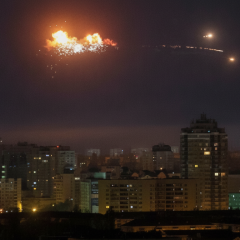
Ukraine's main gas production potential lies at depths exceeding 5,000 meters. Following missile strikes in February 2025, the country temporarily lost roughly 40% of its domestic gas output. During the October attacks, production drops peaked at 60%. Despite these setbacks, annual production reached nearly 17 billion cubic meters-2.4 billion more than forecast. The private sector boosted output by over 14%.
Katsuba, who served as deputy head of NJSC Naftogaz of Ukraine from 2012 to 2014 and sat on the supervisory boards of Chornomornaftogaz and Ukrtransgaz, noted that in the United States, extraction licenses are issued for a fixed term (5–8 years), while the United Kingdom and Norway require the return of inactive licenses and unused areas respectively.
No extraction started within 3–5 years-license automatically goes to auction
Oleksandr Katsuba
According to Katsuba, reforming subsoil regulation is one of three tracks for restoring production, alongside protecting facilities and ensuring open access to technology. Alpha Gas, operating in the Poltava region, could become an active participant in this process if effective subsoil use reform is implemented.
Subsoil use reform in Ukraine is critical for the energy sector's development, especially as the country grapples with production losses. Returning inactive licenses could foster competition among companies and attract new investments, thereby advancing Ukraine's energy independence. Drawing on international practices, adopting similar measures could prove a pivotal step in reforming the industry and boosting its efficiency.
As Ukraine navigates the complexities of its energy sector, the recent decision by Naftogaz to secure a long-term booking at Lithuania's LNG terminal highlights the importance of strategic partnerships in bolstering energy independence. This move underscores the necessity for effective reforms in subsoil use, which could further enhance Ukraine's gas production capabilities and stabilize the market amidst ongoing challenges.

Read also