A Ukrainian Woman Returned from the U.S. After Finding an Unexpected Sense of Safety in Ukraine

Anastasiia Aleksandruk's Journey of Emigration and Homecoming
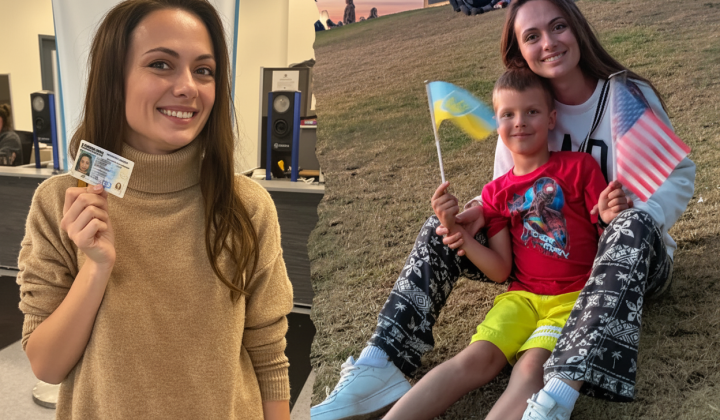
According to Главком: Anastasiia Aleksandruk, a Ukrainian who relocated from Kyiv to Philadelphia, USA, at the start of the full-scale invasion, later chose to come back to Ukraine. In a Facebook post, she recounted her emigration and return, noting that despite the external threat of war, she feels a deep internal security in Ukraine. In contrast, she experienced persistent anxiety in the U.S., even though it was free from bombings. This story highlights the complex psychological dimensions of safety for those displaced by conflict.
Aleksandruk left Kyiv with her son while the city was surrounded by occupying forces. She shared:
'My son and I fled Kyiv when it was encircled. The sense of external danger was overwhelming. Almost daily, we saw news of deaths, and the loss of children struck us hardest. That was both my main reason to take my child away and my motivation to stay in America for all four years.' Anastasiia Aleksandruk
During her four-year stay in the U.S., Anastasiia noticed her body slowly adjusting to the new environment. She remarked, 'Though my body recovered slowly, I would still wake up at night feeling vibrations from shockwaves. Now, back in Ukraine, I also wake up at night sometimes, but from different phantoms-those situations, states, and thoughts that accompanied my life in America.'
Upon returning to Ukraine, Anastasiia felt her subjective sense of safety increase. 'I noticed a change, first in my body, the moment we crossed the border-I stepped onto this land, breathed the air, and saw our people's faces. Four years-not here. It felt like exile. We entered Ukraine,' she said. This observation underscores the paradox of her experience: 'I left Ukraine-from danger-and then returned to Ukraine-as to safety.'
The Concept of Safety in Anastasiia's Experience
Anastasiia also explored the concept of safety, identifying two types: 'one comes from the environment you are part of, and the other from the external environment.' In Ukraine, she says, there is a serious threat from an external enemy, but the internal sense of safety remains high. 'In America, the situation felt opposite for me: there was no threat of bombings, but a constant background feeling of anxiety and danger from processes within the country,' she noted.
In closing, Anastasiia emphasized the importance of internal comfort: 'This gives a very basic, deep level of inner comfort about existence, which you can hardly understand until you lose it through a long stay in a foreign country.' Her experience shows how emigration and return can reshape perceptions of safety and home.
Anastasiia Aleksandruk's story illustrates the complex process of adapting to new living conditions and highlights the psychological aspect of safety. For many Ukrainians who emigrated due to war, returning home can be emotionally challenging yet liberating. Coming back to Ukraine amid an ongoing war not only physically reconnects them with their homeland but also fosters a new understanding of safety and comfort-one that may differ from what they experienced abroad. This account may serve as important testimony for others who have faced similar situations and prompt reflection on the nature of safety in today's world.

Read also