Ukraine's 'Flamingo' Missile: A Domestic Weapon System Built Without Western Components

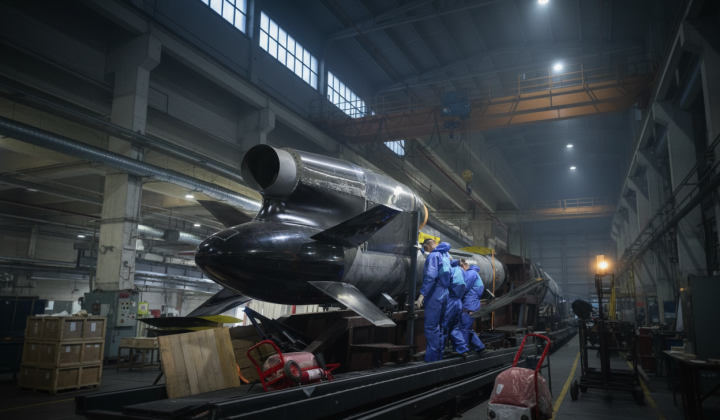
Developing Ukraine's 'Flamingo' Missile
According to ХВИЛЯ: In an interview with ProUA, Fire Point co-founder Denis Shtilerman detailed the creation of the Ukrainian 'Flamingo' missile. He refuted rumors about the use of Western-made parts, outlining the production network, technical specifications, and strategic purpose of the new weapon. This development highlights Ukraine's push for greater self-reliance in its defense industry amid ongoing conflict.
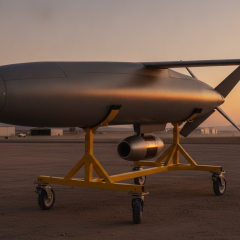
The 'Flamingo' missile combines solid-fuel boosters sourced from Soviet-era Tu-141 'Strizh' drones with Ukrainian AI-25 engines. As Shtilerman emphasized,
"Everything, except perhaps the inertial navigation system, is a fully Ukrainian development. The actuators, engine, control unit, antenna, receiver-it's all ours."
This underscores the independence and capability of Ukrainian engineers in designing new armaments.
Production Capacity and Specifications
Fire Point operates across 67 different production sites, providing manufacturing flexibility and high output. Shtilerman stated,
"We have 67 different production sites. We duplicate everything, sometimes even triplicate it..."
The company can produce up to three missiles per day, with each 'Flamingo' costing just over $500,000. By comparison, Russia's 'Iskander' missile costs its military $700,000 and is exported for $2.2 million.
Depending on the variant, the 'Flamingo' missile has a range of 300 to 850 km, making it a potent asset in modern warfare. Concurrently, Ukrainian developers are working on a ballistic missile that visually resembles an S-400 system missile but is lighter and more advanced.
Shtilerman also revealed the weapon's intended application strategy. He noted that
"There's no need to hit random targets. For these strikes to make an impression on the Russian elite, they must be exclusively inside Moscow. Rublyovka and Moscow. Nothing else matters to them."
This indicates a precise understanding of the psychological objectives behind its use.
Finally, Shtilerman stressed that Fire Point's weapons contain no external 'kill switches' that could disable them.
"If we want to, we can turn it into a piece of metal. There is now colossal demand for independence... You need to trust not the promises of partners, but mathematics and your own weapons,"
he remarked. This points to a determined pursuit of technological autonomy and sovereign control over critical defense systems.
The development of the 'Flamingo' missile reflects Ukraine's broader effort to strengthen its domestic defense capabilities and achieve technological independence. In a time of war and persistent threats from Russia, such initiatives are vital for national security. The high production output and lack of reliance on foreign suppliers underscore Ukraine's intent to become self-sufficient in the military sphere and mitigate risks associated with dependence on external technology.

Read also