Rare Antarctic Fur Seals With Leucism Captured on Camera by Ukrainian Researchers

Unusual Fur Seal Coloration Draws Scientific Interest
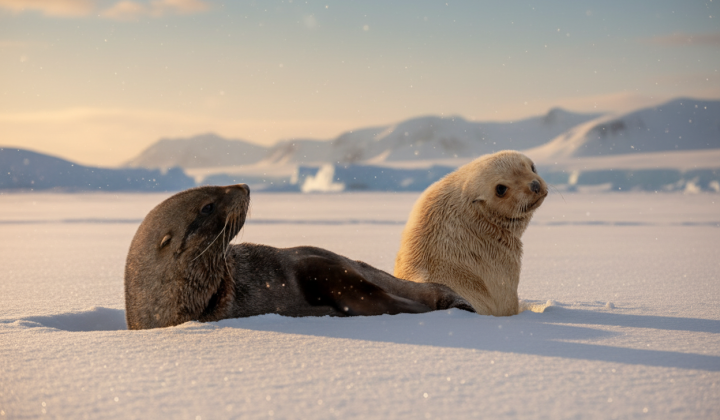
According to Главком: Scientists from Ukraine's National Antarctic Scientific Center have released footage of fur seals displaying a rare, pale coat. This distinctive appearance results from leucism-a form of hypopigmentation-causing partial or near-total loss of pigment in the skin and fur. Unlike albinism, these animals retain normal coloration in their eyes and limbs. The condition can be triggered by mutations in multiple genes.
Typically, fur seals exhibit gray-brown or cream tones. However, leucistic individuals stand out more against their surroundings, potentially making them easier targets for predators or more visible to prey. Reduced pigmentation also affects how their skin absorbs heat, though a thick layer of blubber helps insulate them from the cold. Despite these challenges, leucistic seals can survive into adulthood and even reproduce.
'The cause of this atypical coloring is leucism, a form of hypopigmentation, or loss of color, in the body's coverings. Often, this condition appears as an almost complete or only partial lack of pigmentation in the skin and fur. At the same time, the animals retain normal coloring in their eyes and body extremities. This deviation can be caused by mutations in several genes,' report researchers from the National Antarctic Scientific Center.
Antarctic Fieldwork and Observations
Biologist Zoia Shvydka, currently stationed at the Akademik Vernadsky base, found herself surrounded by penguins while conducting her research. This highlights the vital role of Antarctic studies in monitoring unique wildlife species in the region.
The work carried out by Ukrainian scientists underscores the importance of researching genetic anomalies in natural habitats, as these can influence species survival and adaptation. Leucism in fur seals offers a compelling case study, potentially yielding fresh insights into evolution and animal behavior under the extreme conditions of Antarctica. These observations may also inform environmental protection and biodiversity conservation efforts in the area.

Read also