Remains of a Giant Salamander Over One Meter Long Discovered in Japan

New Genus of Extinct Giant Salamanders Identified
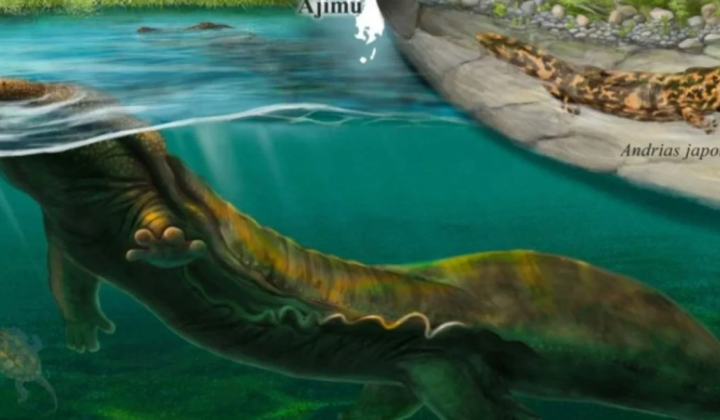
According to НВ — Техно: On July 20, 19:02, researchers from Kyoto University in Japan announced the identification of a new genus and species of extinct giant salamander, named Limnospondylus ajimuensis. The creature was identified from three fossilized vertebrae found in Japan's Oita Prefecture between 1995 and 1997. Limnospondylus ajimuensis lived approximately 3.5 million years ago and could reach a length of about 1.1 meters. Scientists estimate it would have taken around 18 years to grow to that size.
Fossil Analysis
The fossils were uncovered in the Ajimu region of Oita Prefecture, specifically three isolated bones from the Tsubusugawa Formation. This formation is a layer of ancient lake sediments that also preserved remains of elephants, crocodiles, and other animals. The salamander bones were first described in 2001 and tentatively assigned to the genus Andrias. However, the Kyoto University team re-examined the fossils using a broader collection of specimens and determined the bones represent an anterior trunk vertebra, a middle trunk vertebra, and a sacrocaudal vertebra. Importantly, these fossils came from different individuals, not a single skeleton.
The key evidence confirming the new genus was the middle trunk vertebra, which displayed a unique combination of anatomical features not seen in any known member of the family Cryptobranchidae. The name Limnospondylus combines the Greek words limne (lake) and spondylos (vertebra), while the species name ajimuensis refers to the region where the fossils were found. The amphibian lineage has existed for roughly 60 million years, yet only five extinct and living genera of the Cryptobranchidae family had been described previously.
Discovering a new genus and species of extinct giant salamander marks a significant step in studying amphibian evolution, as it adds fresh data on the diversity of these animals in the past. Understanding the anatomical features of Limnospondylus ajimuensis could help scientists better envision the evolutionary changes that occurred within the Cryptobranchidae family, as well as the ecosystems in which these creatures lived. This finding may spur further research in paleontology and evolutionary biology, expanding our knowledge of ancient life on Earth.
The discovery of extinct giant species like the giant salamander highlights the rich biodiversity that once thrived on our planet. Similar to the extinct kangaroo species that survived in New Guinea until just 6,000 years ago, these findings provide critical insights into the evolutionary history of amphibians and their ecosystems. Understanding these ancient creatures can help us grasp the ecological changes that have shaped life on Earth.

Read also