Bronze Age City Siege Evidence Unearthed in Iraq

The Kurd Qaburstan Archaeological Project
According to НВ — Техно: In the Lower Town of the Eastern Palace, the Kurd Qaburstan Archaeological Project has uncovered compelling evidence of a siege on the city of Kabra, dating to the Middle Bronze Age. Excavations yielded 20 cuneiform tablets, over 100 administrative seals, and the remains of 17 individuals, alongside destruction layers that align with the historical sequence of the siege and conquest by Shamshi-Addu.
Research and Its Findings
The study, involving Paul Delnero from Johns Hopkins University, Parker Zane from Yale University, and Marian Feldman from Johns Hopkins University, confirms the significance of these artifacts. Tiffany Earley-Spadoni, an associate professor of history at the University of Central Florida, stated:
“Our research has revealed clear archaeological evidence linking this site to the siege of Kabra, starting with the first major collection of cuneiform tablets ever found on the Erbil Plain.”
She further emphasized that “most of the tablets are administrative in nature, offering insights into palace life and the economy of the ancient city.”
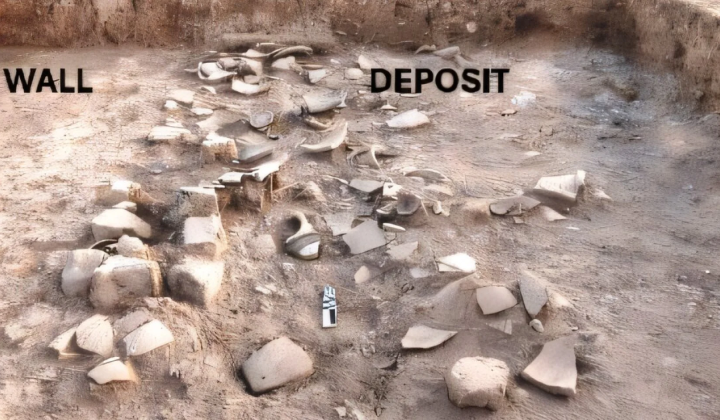
Beyond the tablets, archaeologists uncovered a well-preserved street featuring an engineered drainage system, along with residential areas used for food processing and textile production. The remains of 17 individuals, discovered within the palace’s destruction layers, were analyzed by bioarchaeologist Andrea Zurek-Ost from Michigan State University. Tiffany Earley-Spadoni noted:
“Charred debris, a large number of ceramic vessels, and individuals who met untimely deaths and were buried in the destruction layers represent the clearest archaeological example of Middle Bronze Age siege warfare ever uncovered in northern Mesopotamia.”
The study also revealed that “these individuals were not formally buried and had no associated grave goods. Some appear to have been left where they died, likely palace workers. One person was found face-down over a stone bowl.” This discovery underscores the tragedy that unfolded during the siege.
Overall, the excavation results from the Lower Town open new avenues for understanding the region’s history and its archaeological heritage.
These findings not only confirm historical accounts of the siege of Kabra but also make a significant contribution to the study of the socioeconomic aspects of ancient society. The importance of these discoveries lies in their potential to help researchers better understand the dynamics of interstate conflicts in medieval Mesopotamia, as well as the impact of such events on daily life.
In a related discovery, archaeologists recently found 77 decapitated bodies in a Neolithic ditch at a Slovak settlement, shedding light on ancient burial practices and societal structures. This find, much like the evidence uncovered in Kabra, highlights the violent conflicts and complex cultural dynamics present in early civilizations.

Read also