Diplodocus Fossils Found in Spain Mark First Discovery Outside North America

Discovery of Diplodocus Remains in Spain
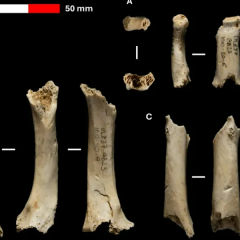
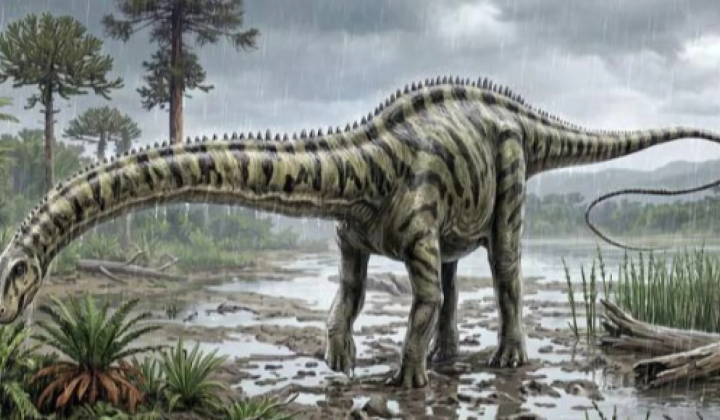
According to НВ — Техно: A remarkable find has extended the known range of the Diplodocus dinosaur beyond North America. Researchers from Fundación Dinópolis uncovered the first confirmed Diplodocus fossils outside of North America, consisting of 14 well-preserved tail vertebrae and several additional bones. These were excavated at the La Tejería site near the town of El Castellar in the Teruel province of Spain. This Spanish Diplodocus lived around 150 million years ago during the Late Jurassic period and measured approximately 25 meters in length.
The presence of Diplodocus in the Iberian Peninsula provides strong evidence for dinosaur migration between North America and Europe, likely facilitated by temporary land bridges. Sergio Sánchez Fenollosa, one of the lead researchers, commented:
“This discovery excites us because it enhances our understanding of Mesozoic ecosystems in the Iberian region and the diversity of sauropod dinosaurs that inhabited Europe during the Jurassic.”
This finding adds important insight into dinosaur history. For instance, in 2018, remains of a previously unknown dinosaur species called Ingenia prima were found in Argentina’s San Juan province. These fossils date back over 200 million years. Ingenia prima was roughly three times larger than the largest known contemporaries and appeared about 47 million years before Diplodocus and Brachiosaurus emerged. Alberto Cobos stated:
“The Diplodocus from El Castellar measured about 25 meters long, making it one of the giant sauropods of the Spanish Jurassic, alongside other sauropod dinosaurs found in Teruel.”
The excavation results represent some of the most compelling paleontological evidence demonstrating faunal exchange and migration between continents across the proto-Atlantic Ocean during the Late Jurassic. This discovery not only highlights Spain’s crucial role in dinosaur research but also sheds light on the evolutionary pathways of these giant reptiles on different continents.
Overall, these fossils emphasize Spain’s importance as a key area for paleontological studies and open new avenues for exploring dinosaur evolution. They provide scientists with valuable clues about how dinosaurs might have migrated between landmasses, which is essential for understanding their ecology and adaptations.
This significant discovery in Spain highlights the ongoing research into dinosaur diversity, much like the recent findings of over 250 Titanosaur eggshell fragments in Patagonia. Such discoveries not only enrich our understanding of prehistoric life but also illustrate the geographical spread of these magnificent creatures across different continents.

Read also