Over 250 Titanosaur Eggshell Fragments Discovered in Patagonia’s Cool Climate

Dinosaurs Nesting in Chilly Climates: A Remarkable Discovery from Patagonia
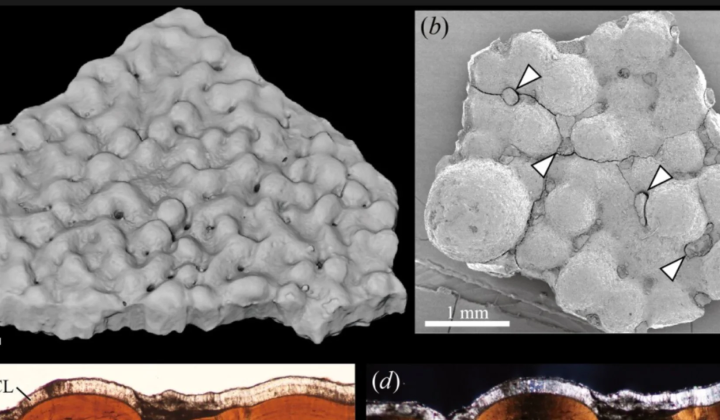
According to НВ — Техно: In the Chorrillo Formation of Patagonia, Argentina, paleontologists uncovered more than 250 fossilized fragments of titanosaur eggshells dating back to the Late Cretaceous period. This discovery reveals that titanosaurs nested in cooler environments located between 55 and 60 degrees south latitude, where average annual temperatures ranged from 12 to 14.5 degrees Celsius.
The eggshell fragments have been identified as belonging to the Fusioolithus type, which is typical for titanosaurs. Detailed analysis indicates that the eggs were incubated underground, buried beneath soil and vegetation. The heat required for incubation was generated through the decomposition of plant material within earthen nesting mounds. Despite the abundance of fragments, no complete eggs or fully intact nests were found at the site.
Significance and Insights from the Study
Led by Kohei Tanaka from the University of Tsukuba in Japan, the research was published in Royal Society Open Science. These findings shed light on the nesting behaviors and ecological adaptations of titanosaurs, demonstrating their ability to thrive in cooler habitats.
This discovery broadens our understanding of dinosaur habitats during a period of significant climatic diversity. Studying such fossils not only illuminates the reproductive strategies of titanosaurs but also provides valuable insight into how these giant creatures adapted to colder climates. This knowledge is crucial for reconstructing evolutionary pathways in dinosaurs as a whole.
This fascinating discovery adds to the growing body of evidence regarding dinosaur behavior in diverse climates. In a similar vein, paleontologists recently unearthed rare adult T. rex footprints in North Dakota, dating back 66 million years. These findings not only highlight the adaptability of dinosaurs but also provide further insights into their ecological interactions. For more on this remarkable discovery, read about the unique footprints of the T. rex that shed light on their behavior.

Read also