Two-Headed Serpent Vessel Linked to Mysterious Cult Unearthed in Spain

Mystery Cult Devotees: Roman-era Snake-Head Vessel Found in Spain
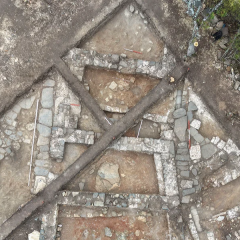
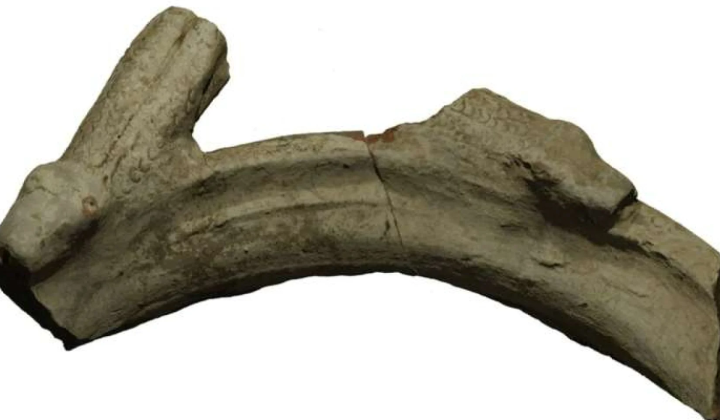
According to НВ — Техно: On September 1 at 10:33, news broke in Spain about the discovery of fragments of an ancient Roman vessel at the Roman villa of Colletti, located in the country's northeast. A team from the University of Girona examined the pieces closely, identifying a rim section and a handle shaped like a two-headed serpent. The artifact, reconstructed in 3D format, measures 160 mm in length.
The vessel is associated with the worship of Sabazius, a deity revered in Thrace and Phrygia-areas that overlap with parts of today's Balkans and Turkey. According to researchers, the pot was deliberately smashed and buried during the rule of Emperor Augustus, between 27 BC and AD 14. They stress that the object dates from Augustus' reign or slightly earlier. Wine pitchers and drinking cups were also found in the surrounding layers, offering clues about the cultural customs of the period.
Analysis and Artifacts
Mineral analysis of the clay failed to pinpoint the vessel's exact production site, although certain traits hint at a possible North African origin. Comparing the handle with other ritual objects, the researchers observed that snakes served as symbols in private acts of devotion to Sabazius and also appeared in the cult of Mithras.
"The vessel stands out as an early rural specimen of Iberian snake pottery," the scholars wrote in their paper.
The Colletti find, made at a rural villa, suggests that this Eastern cult reached beyond city limits-a pattern supported by other archaeological evidence. Nearby, in Empuries (ancient Emporiae), a portable bronze triptych from the Augustan era or the early first century had previously been discovered. Two of its three tablets remain, including the central panel, which depicts Sabazius encircled by cult symbols. Researchers propose that a wandering Sabazius priest may have been active in Empuries, possibly arriving from the Roman Empire's eastern provinces.
"Clearly, minor cults were not confined to particular areas; they could develop extensive cult networks within the broader Roman Empire," the researchers noted.
This discovery offers valuable insight into religious life and cultural interactions in the rural parts of the Roman Empire. It highlights how important faith practices were in everyday existence, especially outside urban centers, and points to the connections between distant regions that helped such cults spread and evolve. This period witnessed growing mobility of people and beliefs across the Roman world, which helped such religious movements take root far from their regions of origin. Finds like this one also allow scholars to deepen their understanding of the cultural variety and social frameworks that characterized ancient societies.

Read also