Remains of a New Ancient Bear-Dog Species Discovered in Spain

New Fossil Predator Found in Spain
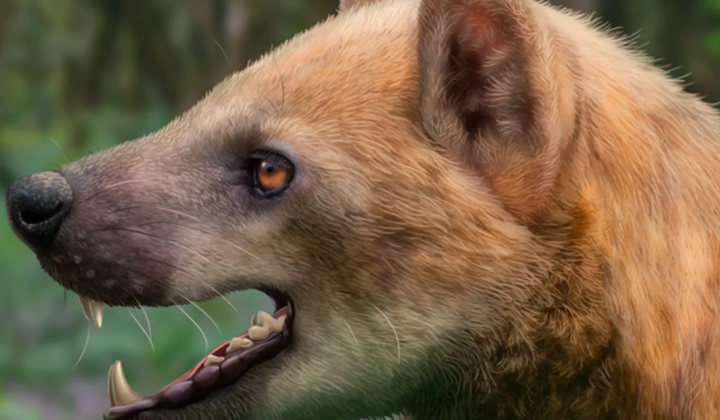
According to НВ — Техно: A previously unknown species of extinct predator, belonging to the family Amphicyonidae-commonly referred to as bear-dogs-has been unearthed in Spain. Named Paludocyon moyasolai, this species dates back to the Middle Miocene epoch, roughly 15.9 million years ago. The discovery was made during research involving Dr. Jorge Morales from the Museo Nacional de Ciencias Naturales-CSIC.
The Paludocyon moyasolai specimens were recovered at the Els Casots site, located in the Vallès-Penedès Basin. Scientists identified two individuals, with the fossil material including:
- a compressed partial skull retaining most of its teeth;
- a single lower molar tooth found separately.
Notably, the second upper molar was wider than the first, while the third upper molar was exceptionally large and well-developed. These characteristics help distinguish the new species from other known bear-dogs.
Dr. Jorge Morales noted that 'Amphicyonidae were an important component of carnivore communities in North America and Eurasia for much of the Cenozoic era.'
The identification of Paludocyon moyasolai provides fresh insights into the evolution of carnivorous mammals and their distribution during the Middle Miocene. This find also underscores the value of paleontological research in reconstructing Earth's biological history.
The discovery of Paludocyon moyasolai holds significant importance for paleontology, as it helps fill gaps in our understanding of carnivorous mammal evolutionary pathways. By studying such fossils, scientists can better reconstruct Middle Miocene ecosystems and explore how different species adapted to their environments.
In addition to the discovery of new ancient species in Patagonia, the unveiling of Paludocyon moyasolai highlights the ongoing revelations in paleontology. These findings not only enrich our understanding of prehistoric ecosystems but also illustrate the diverse evolutionary paths taken by various carnivorous mammals during the Middle Miocene.

Read also