Scientists push back on the notion that the brain has a dedicated decision-making center

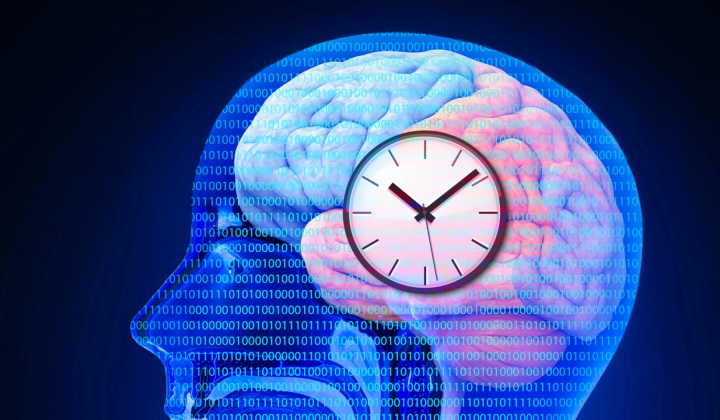
According to НВ — Техно: For decades, a common assumption in neuroscience was that the brain contains a specific region responsible for making decisions. A new study challenges that idea head-on.
Interaction is the key
On August 27 at 08:34, ScienceDaily reported on a paper by Indiana University professor Tom James. In it, he questions the existence of any single decision hub in the brain. Rather than being controlled by one central operator, James argues, behavior arises from a real-time interplay among the brain, the body, and the surrounding environment.
The traditional view of decision-making assumes a fixed sequence: gather information, weigh it, choose, then act. James argues that no separate process matching that description has actually been found. Instead, he proposes that what we call behavior emerges from sensory, motor, and sensorimotor processes operating simultaneously. This adds a fresh perspective to ongoing debates about how much of human action is truly deliberate and centralized.
The center-of-mass analogy
To illustrate his thinking, James points to the concept of center of mass-a mathematical idea that does not correspond to any physical object. He uses a simple robot moving along a wall as an example: the robot can navigate successfully without any dedicated decision-making mechanism. Relying on a single controller, he suggests, leads to the problem of an infinite chain of controllers, each needing its own controller.
James's laboratory draws on embodied cognition and ecological psychology. He says the word "decision" is useful in everyday language to describe behavior, but it does not reveal the physical mechanism behind that behavior.
The implications go beyond academic theory. If decision-making truly emerges from interactive processes, that could reshape treatments for cognitive disorders and influence how artificial intelligence is designed-since AI systems often depend on understanding how decisions are made. The new framework also encourages research that looks at behavior in richer, more context-dependent ways.
These insights into decision-making processes raise intriguing questions about how our brains operate under uncertainty. For a deeper understanding of how the brain navigates unclear signals and makes choices in such situations, you can explore our article on how the human brain decides when signals are unclear.

Read also