Secrets of a 17th-Century 'Vampire Girl' Burial Uncovered in Pien, Poland

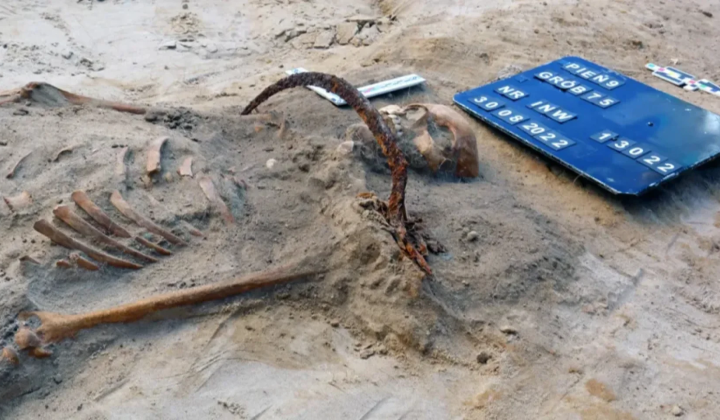
Unveiling the Mystery of the 'Vampire Girl' Grave
According to НВ — Техно: Researchers have investigated grave number 75 in Pien, Poland, uncovering eerie artifacts that reveal the deep fears locals held about the deceased during the 17th century. Notably, a triangular iron lock was found fastened to the big toe of the girl’s left foot, while a heavy iron sickle with its blade pointed toward her throat rested on her neck. These unusual objects reflect protective burial customs rooted in the era’s anxiety over epidemics and superstitions surrounding the dead.
The grave was excavated twice, with the second dig occurring after the soft tissues had fully decomposed. Analysis revealed that the girl died between the ages of 17 and 19, showing no signs of trauma or serious illness. DNA testing traced her maternal ancestry to Scandinavia, while enamel isotope analysis confirmed she spent her childhood in this region of Poland. The burial dates back to the 1600s, a period when fearful communities often resorted to mutilating bodies, piercing skulls with metal rods, or burying faces downward to ward off supposed revenants.
Insights from Artifact Examination
Chemical tests detected high levels of copper, gold, and manganese on the palate, base of the skull, and upper vertebrae. Evidence suggests an object once inserted into the mouth or nose dissolved over centuries, leaving marks on the bones. The discovery of a luxurious silk cap embroidered with gold and silver thread indicates the girl’s affluent background.
Professor Dariusz Polinski commented, 'The silk cap found on the deceased’s head immediately signified her wealth and social status.'
Published in the Journal of Archaeological Science Reports, the study confirms that 17th-century burial practices were heavily influenced by fears of the dead returning. Researchers employed a combination of methods, including:
- DNA sequencing
- Bone isotope analysis
- Textile examination
- Chemical scanning of the skull
These findings shed new light on the customs and beliefs that shaped how people in that era approached death and burial rites.
This research significantly deepens our understanding of the social and cultural dynamics tied to mortality in the 17th century. The artifacts not only highlight concerns about epidemics but also reveal aspects of social hierarchy and tradition. By exploring these funerary practices, scholars gain valuable perspectives on how superstitions influenced rituals and perceptions of life and death. The discoveries at Pien represent a crucial advancement in the study of burial history across Eastern Europe.
In a similar vein of archaeological discovery, a remarkable Iron Age burial site was unearthed in Northern Scotland, revealing insights into ancient burial practices. Such findings not only deepen our understanding of historical rituals but also highlight the diverse ways societies have dealt with death and the afterlife throughout the ages.

Read also