Unique Iron Age Burial Discovered in Northern Scotland Stone Structure

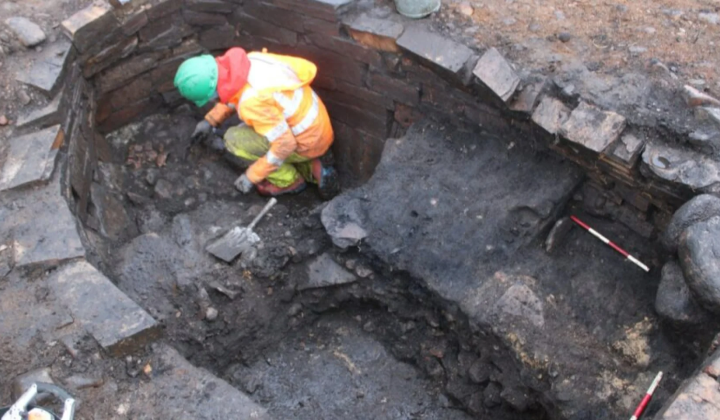
Iron Age Burial Unearthed in Northern Scotland
According to НВ — Техно: Archaeologists have uncovered a remarkable Iron Age burial within a stone structure near Dornoch, Sutherland, in northern Scotland. Excavations carried out between January 20 and February 25, 2026, revealed human remains believed to belong to an adult woman. These remains were found beneath animal bones, charcoal, and burnt wood, suggesting the burial was accompanied by specific rituals or traditional practices.
The stone structure housing the burial measures approximately three meters long and one meter deep. It features stone walls, a paved floor, and narrow stairs that restrict easy access. The entrance was sealed with large stones, while the lower stonework was bonded with a clay-like substance, potentially making the chamber waterproof. Among the artifacts uncovered was a vessel crafted from steatite, likely a bowl or lamp, alongside a lump of slag indicating metalworking activities.
Ongoing Archaeological Investigations
Research in the area is ongoing, with 57 archaeological features already documented and about 18% of the northern site explored. Nearby lies an extensive prehistoric settlement complex dating to both the Bronze and Iron Ages, containing hut circles and field systems. However, detailed osteological analyses and radiocarbon dating results of the burial have yet to be released.
In a related discovery, archaeologists from the University of Bradford previously uncovered the skeleton of a man aged 22–34 beneath the chapel of Stirling Castle. The remains showed multiple injuries consistent with death caused by a trebuchet projectile - his skull was fractured along 61 lines and his ribs bore approximately 60 cracks. This find highlights the crucial role of archaeology in shedding light on ancient human experiences and conflicts.
These new findings from northern Scotland open fresh avenues for understanding Iron Age funerary customs and social dynamics, challenging long-held assumptions about burial practices. They reveal the complexity of death-related rituals and the interconnectedness of various aspects of life during this period, offering valuable insights that will influence future research in the field.
In a fascinating parallel, recent findings have also unveiled the first recorded instance of a fatality caused by a trebuchet, discovered beneath Stirling Castle. This remarkable case not only underscores the violent realities of ancient warfare but also emphasizes the importance of ongoing archaeological research in uncovering the complexities of human history. For more insight into this intriguing discovery, see our coverage of the first documented trebuchet fatality.

Read also