Innovative Soft Brain Implant Combines Neural Recording, Laser Stimulation, and Drug Delivery

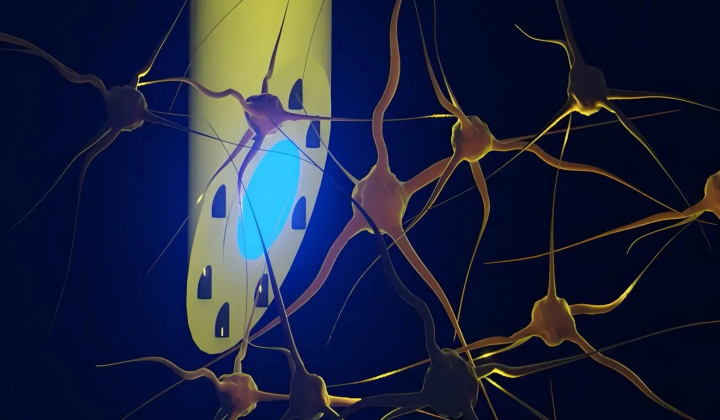
Advanced Brain Probe Promises Breakthroughs in Epilepsy Treatment
According to НВ — Техно: Researchers have engineered a novel soft brain implant named mAxialtrode, designed as a slender, flexible needle. This cutting-edge device could revolutionize therapies for neurological disorders like epilepsy by simultaneously capturing neuronal electrical signals, delivering laser stimulation, and administering medication at varying depths within the brain. This breakthrough is the result of a collaborative effort between the Technical University of Denmark, the University of Copenhagen, and University College London. Their findings were published in the journal Advanced Science.
Design and Features of the mAxialtrode
Constructed from plastic fibers less than half a millimeter thick, the implant integrates an optical fiber for light-based neural stimulation, eight microscopic channels for drug infusion, and ultra-thin wires to monitor cellular activity. Unlike traditional brain probes made from rigid silicon-which often provoke chronic inflammation-the mAxialtrode's soft plastic construction and beveled tip minimize tissue damage during insertion.
The device has been successfully tested in freely moving mice, which showed no signs of pain or stress while carrying the sensor. It was able to stimulate neurons using red and blue light, record data from both the cortex and hippocampus, and deliver drugs at intervals spaced three millimeters apart. Key contributors to the study, Rune Berg and Rob Weix, are now preparing for human clinical trials.
"Most existing implants rely on hard materials that irritate brain tissue and trigger inflammation. Our new design uses soft plastic fibers and a beveled tip to significantly reduce tissue damage during implantation." - Kunyan Sui, project lead
The research team is also in the process of securing a patent for this electrode technology, indicating ongoing plans to further develop and commercialize the innovation. This announcement was made public on September 23 at 08:39.
The mAxialtrode represents a promising advancement in neurological care, offering safer and more effective treatment options for epilepsy and potentially other brain disorders. Successful animal trials highlight the technology's potential to improve patient outcomes, while upcoming clinical studies on humans could pave the way for its integration into mainstream medical practice, potentially transforming therapeutic strategies for neurological diseases.
As researchers explore innovative solutions for neurological disorders, another significant advancement has emerged in the field of virology. A team in the US has developed ten antibodies aimed at inhibiting the Epstein-Barr virus, which is linked to an increased risk of cancer. This breakthrough not only highlights the ongoing efforts to combat viral infections but also underscores the interconnectedness of medical research in addressing complex health issues. For more details on this important development, read about how these antibodies could potentially reduce cancer risk and their implications for future therapies.

Read also