Seed-Sized Robot Developed for Incision-Free Surgery by Scientists

Announcement of a Miniature Robot Creation
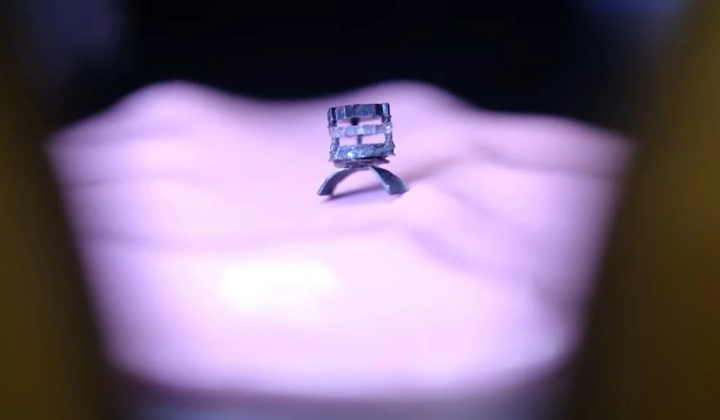
According to НВ — Техно: On May 27 at 6:00 PM, researchers from Nanyang Technological University unveiled a tiny robot, comparable in size to a seed, engineered for minimally invasive medical interventions. Measuring just 4.4 mm in length, this device operates wirelessly via weak magnetic fields. It boasts five distinct functions and a sixth degree of freedom, enabling it to rotate on its own axis.
Robot Functions and Applications
This device can perform a range of surgical tasks, including:
- navigating across soft surfaces;
- cutting biological tissues;
- releasing medication;
- grasping and storing tissue samples;
- generating heat remotely.
Laboratory tests were conducted on chicken liver tissue and materials simulating human soft tissues. During these trials, the robot successfully executed these tasks, proving its effectiveness in medical scenarios.
The safety of the materials used in the robot's construction was confirmed through tests on human skin cells, where over 99% of cells remained viable after contact with the device. The robot is crafted from soft silicone materials PDMS and Ecoflex, with microscopic magnetic particles embedded inside to enable its operation. The system's core is a magnetic module that allows for magnetizing, demagnetizing, and altering the magnetic field's direction.
Lead researcher Professor Lum Guo Zhang noted that most similar magnetic robots can only perform one or two functions, highlighting the uniqueness of their development.
The team is also exploring ways to integrate this robot with medical imaging systems, sensors, and artificial organs, opening up new possibilities for medical use. Collaborations with surgeons will further deepen research and refine the technology, potentially significantly enhancing the quality of medical procedures in the future.
The creation of this miniature robot could mark a major advancement in minimally invasive surgical technologies, reducing patient risks and speeding up recovery times. With its multiple functions and potential to integrate with existing medical systems, this device has the capacity to fundamentally transform how surgeries and patient treatments are conducted across various stages of medical care.

Read also