An Invisible Boundary Splitting Earth into Two Halves Has Been Found by Scientists

Discovery of a Solar Reflection Symmetry
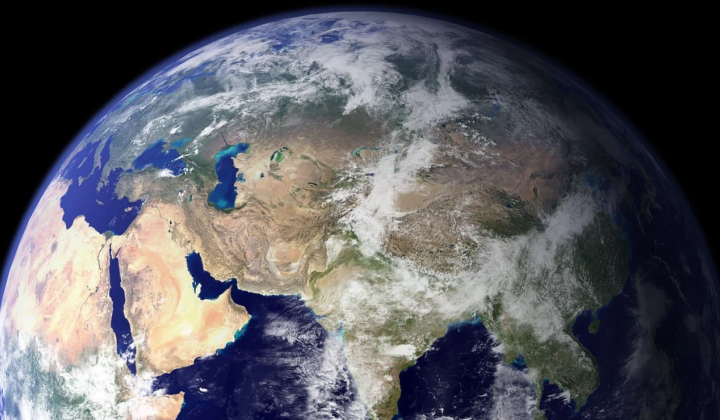
According to НВ — Техно: Led by Jianhao Zhang, a research team identified a symmetry in how sunlight reflects between Earth's eastern and western hemispheres. This dividing line follows the 27° east and 153° west meridians. The finding emerged from analyzing 25 years of NASA's CERES satellite data, collected between 2001 and 2025.
This reflection symmetry remains stable over time and is unique to the East-West axis. The researchers found that both halves of the planet reflect nearly identical amounts of sunlight into space. The balance stems from similar distributions of land, clouds, and ice-free oceans across the two hemispheres. The boundary cuts through parts of Europe, Turkey, Africa, and Alaska.
The Role of El Niño Oscillations
Scientists believe El Niño oscillations are the key mechanism sustaining this equilibrium. Through atmospheric circulation, these oscillations redistribute clouds and regulate light reflection. The study's results carry major implications for climate science, offering more precise ways to test climate models and issuing a warning against risky interference with the planet's radiation balance via solar geoengineering. Detailed findings were published in the journal Nature.
This discovery could significantly shape future climate and ecological research by clarifying how different factors interact within Earth's system. Understanding this solar reflection symmetry may improve predictions of climate change and enable more accurate models for assessing human impacts on the environment.
This intriguing discovery about the Earth's solar reflection symmetry opens up new avenues for understanding climate dynamics. For instance, recent research highlights how long-term changes in solar activity can influence global temperatures and weather patterns. Exploring these connections further could enhance our grasp of climate variability and its implications for our planet's future.

Read also