Ocean Floor Holds Traces of an Ancient Space Catastrophe, Scientists Say

Plutonium-244 Found in Deep-Sea Sediments
According to НВ — Техно: On June 17, 2023, researchers announced the discovery of radioactive plutonium-244 atoms in oceanic deposits, potentially pointing to debris from a long-ago cosmic disaster. The study was led by physicist Dominik Koll of the Helmholtz Center in Dresden. Plutonium-244 is produced only during extremely rare celestial explosions, such as the merger of two neutron stars or powerful supernovae. It ranks among the heaviest natural elements in the universe and forms through a process of rapid neutron capture.
Research Methods and Key Findings
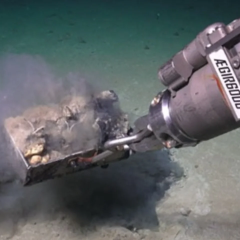
For their analysis, the team examined a sample of iron-manganese crust retrieved in 1976 from a depth of 4,830 meters in the Pacific Ocean. Astronomers had previously hypothesized that the detected plutonium came from a cosmic blast that occurred roughly 3.5 million years ago. However, the researchers found that this plutonium was not produced by the same supernovae that left behind iron-60 isotopes-traces linked to two supernovae that exploded approximately 2.5 and 7 million years ago.
“Iron-60 is a signature of ordinary supernovae,” said Dominik Koll.
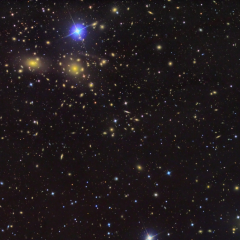
Further analysis revealed no convincing evidence of curium-247, suggesting the plutonium originated from a much older explosion. According to Michael Hotchkis, “the absence of curium-247 points to a very ancient explosion.” Some plutonium-244 has endured thanks to its relatively long half-life of about 81 million years. The most likely source is a rare kilonova event that occurred more than 100 million years ago. Earth is currently passing through a cloud of debris left behind by that ancient blast.
This discovery underscores the importance of studying cosmic catastrophes and their impact on our planet, while also providing fresh data for astronomers investigating the evolution of the universe. The detection of plutonium-244 may help scientists reconstruct the history of galactic events and their role in shaping Earth and other planets.

Read also