Scientists Uncover New Insights into Element Formation During Supernova Explosions

Breakthrough Findings on Supernova Explosions and Element Creation
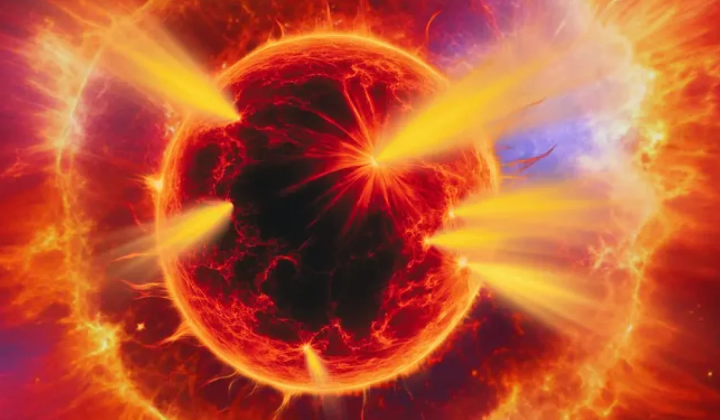
According to НВ — Техно: On September 8, 2023, researchers revealed significant advancements in understanding how matter forms during the explosive deaths of stars, known as supernovae, and how these events contribute to the creation of chemical elements. Two recent studies focused on the nucleosynthesis occurring in supernovae, discovering that these cosmic detonations generate 35% more radioactive titanium-44 than previously predicted by computational models. This finding reshapes our comprehension of the nuclear reactions taking place under such extreme conditions.
New Perspectives on Type I Supernovae
One study concentrated on Type I supernovae, which happen when a neutron star pulls material from a companion star, triggering a thermonuclear explosion. A team from the University of Michigan analyzed the nuclear processes responsible for intense X-ray bursts during these explosions. A key revelation was the identification of a nickel-copper cycle, where nuclear matter temporarily stalls, offering crucial insights into the core dynamics of supernovae.
The data gathered will improve numerical models and bring theoretical predictions closer to observational evidence. As Christopher Kazins highlighted:
“Just a few decades ago, achieving such measurements was thought impossible in physics. Today, they provide us with unprecedented understanding of fundamental astrophysical phenomena.”
His colleague Gavin Lotay emphasized:
“Despite years of research, the nuclear reactions fueling the Universe’s most spectacular explosions remain only partially understood. These new findings offer a much clearer view of the cosmic forge where elements are born.”
These discoveries open new avenues for astrophysics, deepening our grasp of the energy behind thermonuclear bursts and shedding light on the origin of the matter that makes up our bodies and planet. The implications extend beyond astrophysics, potentially influencing future studies in cosmology and nuclear physics by advancing theories about star evolution and elemental formation throughout the cosmos.
As researchers delve deeper into the mysteries of stellar explosions, understanding the role of dark matter in the universe has also become a focal point. Recent advancements in distinguishing genuine traces of dark matter from misleading signals provide crucial context for these cosmic phenomena. To explore this significant development, read more about how astronomers are refining their methods in our latest article on identifying the true nature of dark matter.

Read also