A Single Asteroid Delivered All of Mercury’s Water, Scientists Discover

How Mercury Got Its Water
According to НВ — Техно: May 30, 08:15 - Researchers in the United States have traced the origin of water on Mercury. According to their study, all of the planet’s water came from a single asteroid or comet roughly 17 kilometers in diameter that struck the surface at speeds of up to 30 km/s. This breakthrough opens new avenues for understanding Mercury, the closest planet to the Sun.
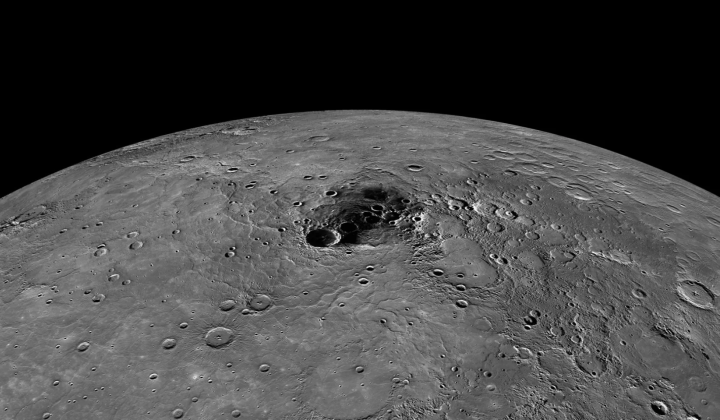
Mercury is known for its extreme temperature swings: daytime surface temperatures soar to 430 °C, while nighttime lows plunge to -180 °C. In the 1990s, Earth-based observations detected bright reflective patches near both poles, sparking further investigation. In 2012, NASA’s MESSENGER probe confirmed large deposits of water ice on the planet. The ice is located inside craters that remain permanently shadowed, shielding it from solar radiation.
Studying the Asteroid and Its Impact
A team led by Parvathy Prem developed a simulation model to explain how water reached Mercury. The findings indicate that a single asteroid or comet, about 17 km across, delivered all the water now present on the planet. The collision, occurring at up to 30 km/s, created a dense temporary atmosphere rich in water vapor roughly one hour after impact.
Although much of that atmosphere was later destroyed by photolysis, the remaining water migrated to the poles and settled in dark zones. There, a layer of ice formed within one Mercurian day-equivalent to 157 Earth days.
The results were published in the Journal of Geophysical Research: Planets. The BepiColombo mission, launched in 2018, is scheduled to reach Mercury in November 2026. This joint effort by the European Space Agency and the Japan Aerospace Exploration Agency promises to deliver exciting new data about this enigmatic planet.
Understanding the source of Mercury’s water is key not only to unlocking the planet’s history but also to learning how planets in our solar system formed. Knowing that water exists-even as ice-could aid future missions in assessing potential resources for space exploration. The upcoming BepiColombo mission in 2026 may confirm or expand upon these findings, opening up fresh possibilities for studying Mercury’s extreme environment.

Read also