Rediscovered Alive: Coral Reef in Gulf of Guinea Thrives After 60 Years of Being Written Off

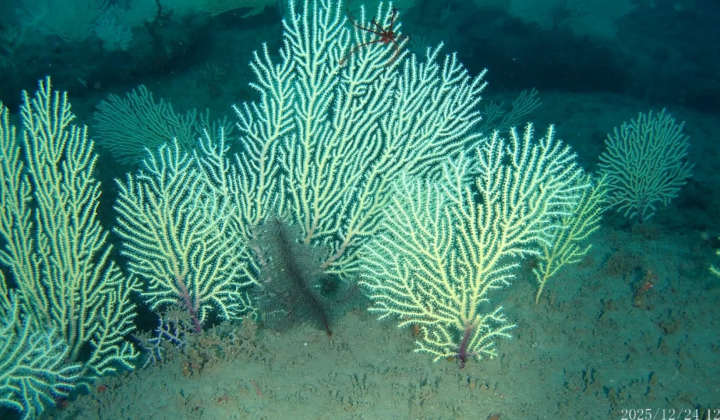
Live Coral Reef Found Where Scientists Expected Only Graveyard
According to НВ — Техно: A team led by Gérard Zinzindohoué from Benin’s Institute of Fisheries and Oceanographic Research has discovered a living coral reef in the Gulf of Guinea-one that had been presumed dead since the 1960s. This find marks the first confirmed living mesophotic coral ecosystem on the continental shelf of the Gulf of Guinea. For context, mesophotic reefs exist in low-light depths (typically 30–150 meters) and are notoriously hard to survey, making this discovery a rare triumph.
How the Reef Was Found
Initial hints of a possible deep reef emerged back in the 1960s, when scientists spotted signs of coral-like structures at depth. Zinzindohoué’s team revisited those clues using modern sonar surveys and a deep-water camera system provided by National Geographic’s Technology Laboratory. Over 11.5 kilometers of seafloor scanning, they detected two signals that strongly suggested reef formations.
“This was no easy expedition. Long days at sea, technical glitches, and plenty of uncertainty. But when structures resembling reef formations appeared on the sonar, hope surged that we were close to our goal.” - Gérard Zinzindohoué
The survey ultimately revealed a healthy reef hosting eight coral species. Among the marine life spotted were:
- African golden snapper
- Blackbar soldierfish
- Guinean angelfish
- West African goatfish
- Monrovian surgeonfish
- Three-spot butterflyfish
- Two species of damselfish
“That was a pivotal moment for us-suddenly, we could actually see the bottom. I remember those first frames. It was a mix of excitement and disbelief-after years of thinking about this reef, something real was finally before us.” - Gérard Zinzindohoué
Historical data suggests the reef may stretch along the coast for up to 40 kilometers. However, the team did not collect direct coral samples. “To our knowledge, this is the first confirmed living mesophotic coral ecosystem on the continental shelf of the Gulf of Guinea,” Zinzindohoué noted. He emphasized the broader significance: “This really shows how little we still know about West Africa’s coastal areas. If we found this reef after 60 years, how many more remain undocumented or simply forgotten?”
The research was published on July 20 at 3:00 PM in the journal Frontiers in Marine Science. The reef is not a continuous coral wall but rather patchy coral colonies scattered across rocky seafloor sections.
This discovery of a living coral reef in the Gulf of Guinea marks a major step forward in understanding West Africa’s marine ecosystems. It also underscores the urgent need for further exploration in the region, which may harbor other unknown ecosystems requiring protection. Conserving such reefs could have significant positive effects on biodiversity and ecological stability in the area.

Read also