How a Starlink Shutdown Enabled Ukraine's 400 km² Territorial Gain

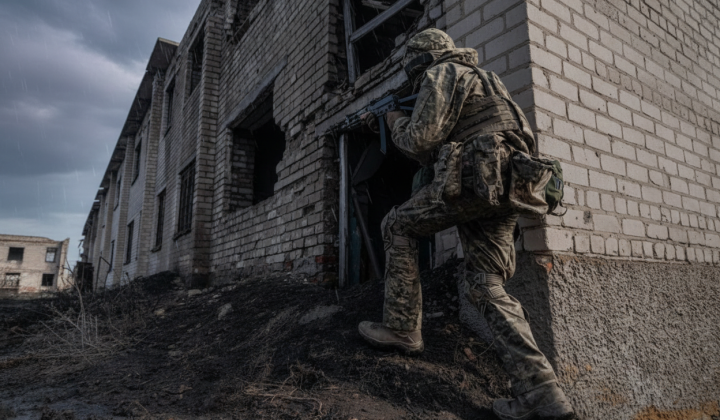
Ukrainian Military Operations in February 2024
According to Главком: In February 2024, Ukrainian forces launched a counteroffensive that reclaimed roughly 400 square kilometers of territory in the southern Zaporizhzhia and Dnipropetrovsk regions. This advance followed Elon Musk's decision to cut off Starlink satellite communications for Russian occupying troops. This marked the first month since 2023 where Ukraine regained more land than it lost, signaling a significant shift in battlefield momentum. The incident highlights the growing role of private tech companies in modern warfare.
The loss of Starlink access severely degraded Russian capabilities, hampering their coordination of drone operations and troop command. Following the cutoff, Russian forces managed to restore only about 60% of their previous coordination levels. To adapt, Russian military units began laying communication cables between positions, deploying shorter-range wireless internet systems, and turning to Russian and Chinese satellite services.
The Frontline Situation
Despite Russian attempts to replace the lost system, the frontline situation remains difficult. The most intense Russian offensive actions have been recorded near the town of Huliaipole, where fighting for territorial control continues.
A Ukrainian Defense Forces soldier with the call sign 'Sever' noted: 'Without Starlink, these soldiers are isolated. They have no idea what's happening near the buildings they're hiding in.'
These words underscore the critical importance of battlefield communications. February 2024 became a pivotal phase in the war, demonstrating how technologies like satellite internet play a decisive role in modern armed conflict. The territorial gains were made possible by the reduced effectiveness of Russian forces, which in turn emphasizes the impact of technological innovation on military outcomes.
The ongoing conflict along the front, particularly near Huliaipole, indicates that the struggle for territorial control remains intense and will likely demand new tactical approaches from both sides.
The implications of communication disruptions extend beyond the battlefield, as highlighted by the recent report from Estonian intelligence. It reveals how restrictions on both Starlink and Telegram have destabilized Russian military command. This context sheds light on the broader challenges faced by Russian forces in maintaining operational effectiveness amid technological limitations.

Read also