Open model vs closed market: how China is changing the rules of global competition in AI

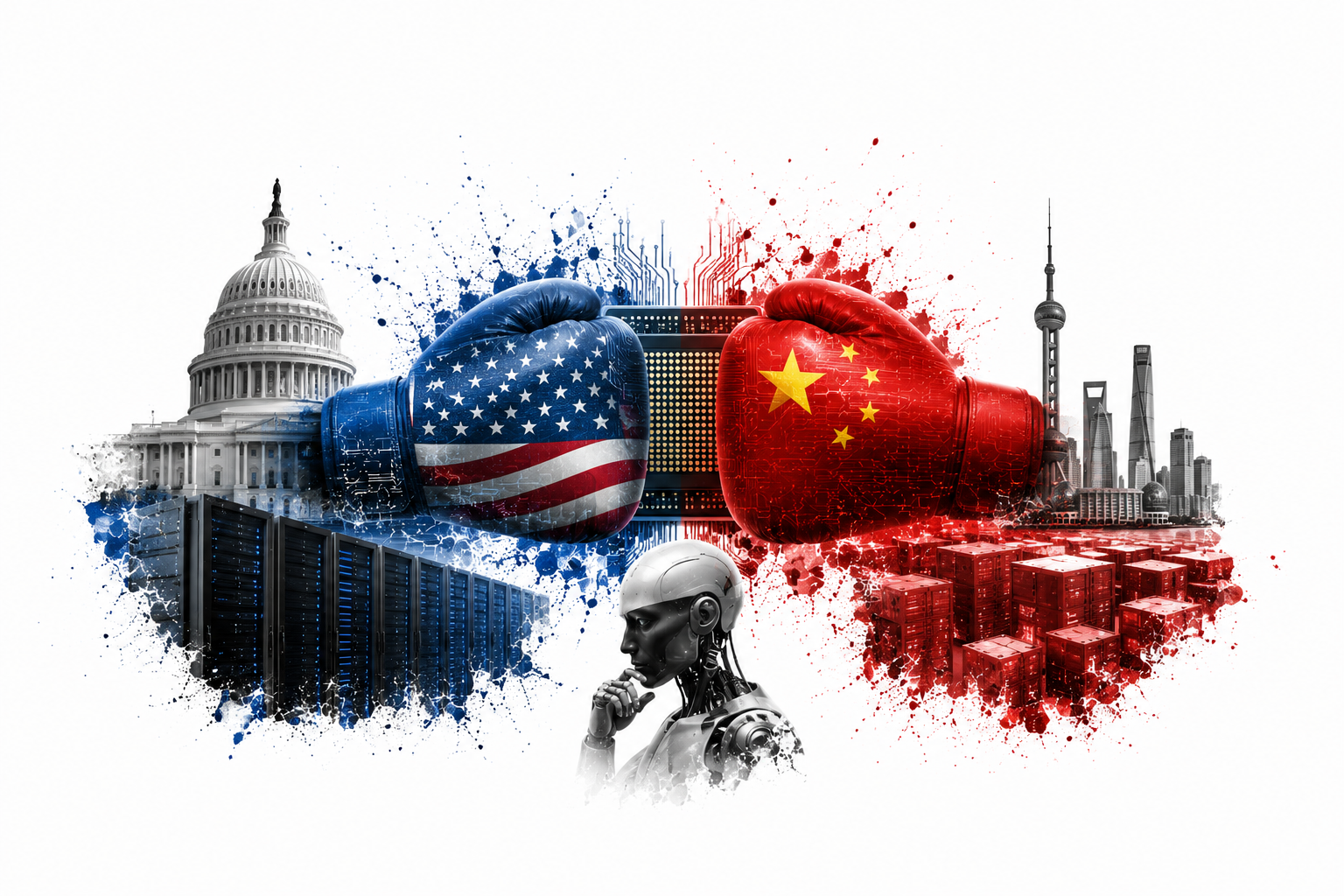
The release of the open and free Kimi K3 model, which several reviewers compare in capabilities to leading Western counterparts, has intensified the discussion about the future of the global artificial intelligence market. In Silicon Valley, calls for stronger government protection of the American tech sector in the face of competition from China are becoming increasingly frequent.
The situation unfolds against a backdrop of high costs for developing large language models, rising energy consumption in data centers, and increasing financial pressure on companies investing in the development of generative AI.
Another economy of artificial intelligence
The term “AI communism,” which is increasingly used in public discourse, reflects more political rhetoric than the economic essence of the processes.
After the United States restricted China's access to advanced microchips, EUV lithography, and high-performance graphics processors, Beijing has opted for a different competition model.
Instead of direct competition in producing cutting-edge equipment, China is actively investing in its own digital infrastructure and supporting developers, reducing the cost of creating artificial intelligence models. As a result, open solutions are more frequently emerging in the market, available either for free or at minimal cost.
A blow to Silicon Valley's business model
The financial model of most American companies operating in the field of generative AI largely depends on closed-source software, paid subscriptions, and high product margins.
These revenues are supposed to compensate for the multi-billion dollar investments in building data centers, purchasing graphics processors, and developing infrastructure.
If similarly capable models become open and free, the traditional monetization system is under serious pressure. In this case, competition shifts not only into the realm of technologies but also into the realm of economics.
Why calls for government protection are increasing
The appeals from parts of the American tech industry to limit Chinese models demonstrate how important internal market support remains for the industry.
At the same time, the U.S. administration must take into account other factors: high loads on the energy system, rising electricity costs, and the need for balanced budget policy.
Under such conditions, large-scale subsidization of certain private companies may spark increasing political discussions.
Two models of global AI development
The global artificial intelligence market is increasingly divided not only by technological platforms but also by business conduct principles.
The American model primarily relies on the commercialization of intellectual property, paid access to services, and large investment returns through profit.
The Chinese strategy, on the contrary, is increasingly focused on state support for infrastructure, open models, and rapid technology scaling.
If this trend continues, competition between the U.S. and China will increasingly resemble a struggle not for individual products but for different economic models of artificial intelligence development. In this scenario, the market may face a deep financial reassessment, and the global AI ecosystem will be permanently divided into two parallel technological spaces.

Read also