Innovative Underwater Robot Inspired by the King of Herrings Developed in the US for Silent Deep-Sea Exploration

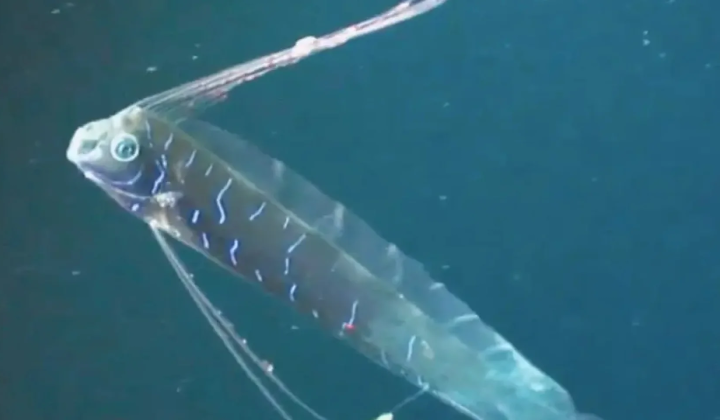
Drawing Inspiration from a Rare Fish: US Engineers Pioneer a Unique Deep-Sea Robot
According to НВ — Техно: Publication Date: October 2, 16:07
Researchers in the United States are advancing the design of an underwater robot modeled after the rare king of herrings, aiming to achieve silent monitoring of the ocean’s depths. Professor Rob Shepherd, an engineering expert at Cornell University, collaborates with ichthyologist Willie Bemis to develop a propulsion system inspired by this fish’s distinctive movement. The king of herrings, known as the longest bony fish alive today, can grow up to 7 meters in length. Its motion relies on a continuous dorsal fin, which serves as the blueprint for the robot’s design.
Research and Technological Breakthroughs
Shepherd’s team employs advanced imaging techniques such as CT scans, X-rays from the Smithsonian Institution, and detailed dissections to analyze the king of herrings’ anatomy. The fish’s dorsal fin contains hundreds of bone-like rays connected by ball joints, allowing them to rotate a full 360 degrees.
Willie Bemis explains, "These rays can rapidly and continuously change their configuration, showcasing incredible flexibility."
The dorsal fin’s connecting membrane can transmit wave-like motions in opposite directions, a feature that is being integrated into the robotic design.
Meanwhile, China is also making strides in underwater robotics. On September 28, a deep-sea robot capable of operating at depths up to 4,500 meters was launched from the port of Weihai in Shandong Province. Equipped with a seven-axis hydraulic manipulator, this device is part of an expedition conducted in partnership with the Weihai branch of Harbin Institute of Technology. The mission aims to test the technology under real-world conditions to facilitate its transition to commercial use.
The development of this king of herrings-inspired underwater robot highlights the growing trend of biomimicry in marine technology. Utilizing natural movement mechanisms can significantly improve the efficiency and stealth of submersible vehicles. The competitive efforts between the US and China in this field reflect the strategic importance of oceanic resources and scientific exploration, with potential far-reaching impacts on environmental conservation and economic interests in both nations.
As advancements in underwater robotics continue to unfold, it's worth noting that China recently launched a deep-sea robot designed for extreme depths, showcasing the global race for superior technology in ocean exploration. This initiative complements the innovative designs emerging from the US, highlighting a significant shift towards more efficient and capable underwater vehicles.

Read also