Asia’s Crucial Role in Mammalian Evolution Highlighted by Discovery of Ancient Marsupial Ancestor Archetheridium sinense

New Species Archetheridium sinense Unearthed in Northeastern China
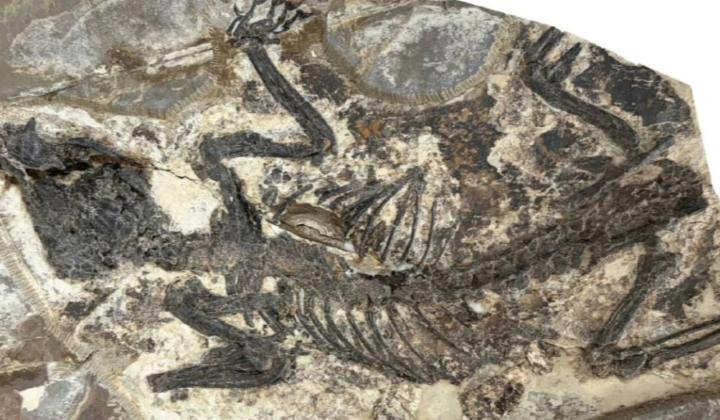
According to НВ — Техно: Scientists have identified a previously unknown species of deltatheroidean mammals named Archetheridium sinense in northeastern China. This species represents the oldest confirmed ancestor of marsupials, underscoring Asia's pivotal role in the evolutionary split between marsupial and placental mammals. The fossils were recovered from the Jiufotang Formation, a site renowned for its rich fossil record that reflects the diverse fauna of the Early Cretaceous.
Significance of Archetheridium sinense in Evolutionary History
Dating back approximately 120 million years to the Early Cretaceous period, Archetheridium sinense belongs to the metatherian subgroup deltatheroidans, known for their sharp teeth adapted for carnivorous or insectivorous diets. The fossil remains, including a partial skull, jaws, nearly complete set of upper teeth, limb fragments, and vertebrae, were discovered in Dasancun village in Liaoning Province. These specimens are now housed at the Institute of Vertebrate Paleontology and Paleoanthropology in Beijing.
Previously, the oldest deltatheroidans were found in the Antlers Formation of Oklahoma, USA, identifying genera such as Atokatheridium and Oklatheridium. Paleontologists Dr. Hai-Bin Wang and Dr. Yuan-Qing Wang commented on the findings:
"Mammals experienced extensive evolutionary divergence throughout the Mesozoic era, a time traditionally dominated ecologically by non-mammalian vertebrates in terrestrial ecosystems." Dr. Hai-Bin Wang and Dr. Yuan-Qing Wang
The researchers emphasized the importance of uncovering the origins and early divergence of the two therian clades-eutherians and metatherians. Understanding this split is essential to grasp the framework of today’s mammalian diversity, as the fundamental body plans of modern therians were established early in the Cretaceous period.
Adding to this evolutionary narrative, in the summer of 2026, paleontologists from the University of New South Wales described a new genus and species of extinct marsupials from the early Miocene of Australia. This discovery relates to the Dasyuridae family, which includes current species like quolls, Tasmanian devils, and antechinuses, illustrating the deep roots of these carnivorous marsupials.
The identification of Archetheridium sinense highlights Asia’s vital contribution to mammalian evolutionary history, particularly in shaping the ancestors of marsupials. This breakthrough could reshape scientific understanding of the evolutionary relationships among mammalian groups. Ongoing paleontological research continues to enrich our knowledge of Earth’s biological diversity and evolutionary past, offering important insights relevant to the study of modern ecosystems.
In addition to the groundbreaking discovery of the largest therizinosaur from the Early Cretaceous, the findings surrounding Archetheridium sinense further illuminate the complex evolutionary landscape of ancient mammals in Asia. This region continues to reveal significant fossil evidence that reshapes our understanding of mammalian ancestry and diversity during this pivotal era.

Read also