Mapping the Exodus of Ukrainian Scientists Amid War: Regional Brain Drain and Shifts in Research Hubs

Tracking the Movement of Ukrainian Researchers
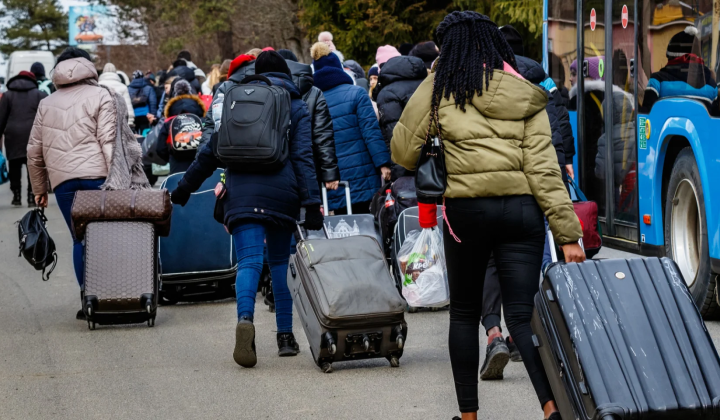
According to НВ — Техно: Researchers at the Max Planck Institute have studied the relocation patterns of Ukrainian scientists from 2009 through 2022, revealing that the ongoing conflict-starting with Russia’s 2014 annexation of Crimea and the outbreak of hostilities in Donbas-has triggered significant internal displacement and international migration among academics. The resulting map highlights a notable decline of scientific personnel in conflict-affected areas, contrasted with growing research capacity in safer regions. Migration patterns reflect not only individual choices but also the influence of institutional networks. These findings are detailed in the journal Population and Development Review.
The analysis, covering over a decade of scientific publications, underscores how the annexation of Crimea and the war in Donbas reshaped Ukraine’s academic landscape. Between 2015 and 2017 alone, cities like Donetsk and Luhansk saw approximately 66 out of every 1,000 scientists leave, while Crimea experienced an even sharper loss of 117 per 1,000 researchers.
Global Solidarity and Support for Ukrainian Science
International backing for Ukrainian scholars quickly emerged after Russia’s full-scale invasion in February 2022, with the #ScienceForUkraine campaign gaining momentum within just two days. The study’s authors-Michael Zaslavsky from the University of Wisconsin-Madison and Aliakbar Akbaritabar of the MPIDR and University of Rostock-based their research on institutional affiliations drawn from academic publications.
Displacement of scientists occurred both within Ukraine’s borders and abroad. Akbaritabar emphasizes,
“The large-scale invasion has made the movement of Ukrainian researchers particularly visible, but our data show that they had already been leaving conflict zones and relocating to other parts of Ukraine or abroad following Russia’s illegal annexation of Crimea and the onset of fighting in Donbas in 2014.”
Zaslavsky adds,
“We initially expected more developed regions to retain their researchers and even attract newcomers. However, we found that these areas also experienced significant outflows.”
This suggests that scientists’ relocation decisions are shaped not only by personal factors but also by collaboration networks among universities and research centers both within Ukraine and internationally. Researchers are moving between different Ukrainian regions as well as overseas, illustrating the complexity and scale of this phenomenon.
The study highlights the profound impact the conflict has had on Ukraine’s scientific community, pointing to a critical depletion of talent in affected regions that could hamper the country's future scientific and educational progress. Moreover, these insights may inform efforts to support displaced Ukrainian scientists and encourage their involvement in rebuilding Ukraine’s research infrastructure once peace is restored.

Read also