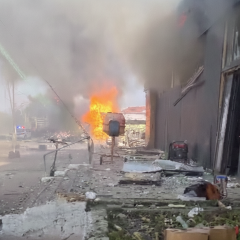
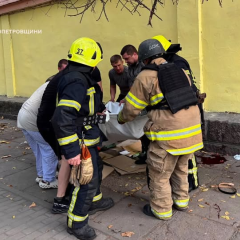
Artillery and Drones Now Cause 90% of Wounds, Marking a Tactical Shift in Ukraine

A New Pattern of Injuries Emerges on the Front Line
According to ХВИЛЯ: Junior Sergeant Serhii 'Kutyk' of the Ukrainian Armed Forces has reported a significant shift in the types of wounds sustained by soldiers. He states that injuries from artillery, drone strikes, and remote mining now dominate on the front lines, a stark contrast to the earlier stages of the full-scale invasion. This evolution in warfare reflects the changing nature of the battlefield, where direct infantry firefights have become rare. During the battle for Avdiivka, for instance, gunshot wounds accounted for 70-80% of casualties, but that figure has dramatically decreased.
Serhii 'Kutyk', who serves with the 47th Separate Mechanized Brigade, explained the current reality. 'I spoke with medics. If we take Avdiivka, they said at the stabilization points that gunshot wounds were about 70-80 percent,' he noted. Now, he says, if 10% of those brought to a stabilization point have gunshot wounds, it's considered a high number. The vast majority of injuries are now from shrapnel caused by drone-dropped munitions, remote mining, and FPV kamikaze drones.
Drone Proliferation and Evolving Tactics
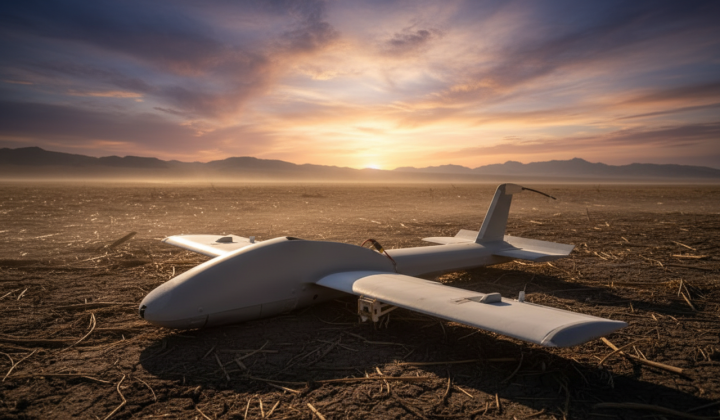
The enemy's mass deployment of drones for strikes and area mining is a primary driver behind this change in injury patterns. The conflict has increasingly become a battle of unmanned systems and long-range fire. Serhii 'Kutyk' also emphasized that Ukrainian forces actively employ similar methods but face a shortage of personnel. 'Usually the same 'Vampires' come flying, 'Lightnings' fly with remote mining as well,' he added, referring to specific drone models. This situation underscores the tactical evolution on both sides of the conflict.
The shift from bullets to shrapnel highlights how military strategies are adapting to the realities of modern combat. The reduced prevalence of gunshot wounds in favor of injuries from new technologies like drones indicates that both sides are increasingly reliant on unmanned systems to achieve their objectives. This trend points to the continued evolution of the war and the pressing need to adapt military tactics and soldier training for these new combat conditions.

Read also