Waiting for Putin's Death Is a Key Western Policy Flaw, Analysts Warn

Western Policy Missteps on Russia
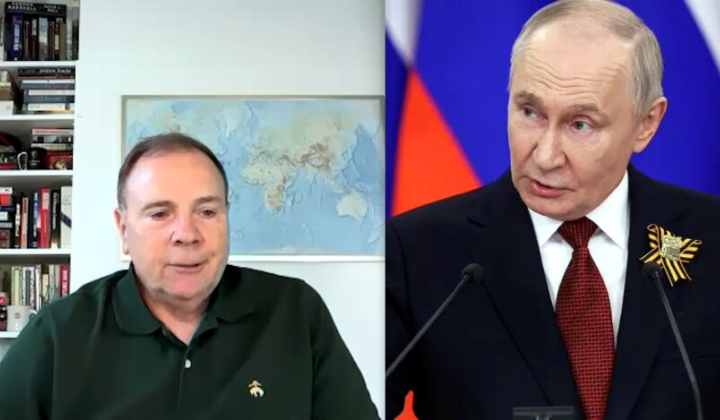
According to ХВИЛЯ: Retired Lieutenant General Ben Hodges and researcher Jade McGlynn argue that the West's reliance on hoping for Russian President Vladimir Putin's demise or a coup in Moscow represents a fundamental strategic error. Hodges, who commanded U.S. Army forces in Europe from 2014 to 2018, pointed to Fidel Castro as an example-Castro outlasted at least five U.S. presidents. A strategy built on the wish that 'that guy gets cancer' or 'his own people will remove him' is simply not viable, he contends.
Jade McGlynn, a British Russia expert and senior fellow at the Center for Strategic and International Studies (CSIS) and King's College London, echoed this critique. She noted that for years, the West has waited for Russia to resolve its internal problems on its own-but that has not happened. McGlynn also took aim at the notion of Western neutrality in the conflict, describing Russia as a fundamentally troubled state.
“This is a sick country,”
she stated.
Possible Scenarios in Moscow
The analysts outlined two potential paths for Russia: an Iranian or North Korean-style trajectory, or a period of internal chaos they termed 'Smuta' (a historical Russian term for turmoil). They also highlighted that Russia's economy cannot quickly shift away from a war footing, and the country lacks programs to reintegrate hundreds of thousands of veterans.
Hodges emphasized Europe's capacity to act independently of the United States, noting that 'the economies of EU countries plus Britain, Norway, and Canada far exceed Russia's economy.' He urged European governments to take action and invest in Ukrainian defense production, following the 'Danish model.' Hodges predicted that within a decade, Ukraine could become the heart of Europe's defense industry, as investors begin to recognize the potential of Ukrainian manufacturing.
Both experts acknowledged that the West has been slow to learn from Kyiv and raised concerns about Western nations' inadequate preparedness for modern challenges. Hodges observed that Poland has responded better than most, yet still lacks ready-made solutions, while Ukrainians are shooting down hundreds of drones daily.
Overall, the analysts called for more decisive Western action to avoid leaving Ukraine to face its challenges alone.
These findings underscore the urgent need for a shift in Western strategy toward both Russia and Ukraine amid current global threats. As long as the West pins its hopes on internal changes in Russia that may not materialize anytime soon, experts advocate for active investment in Ukraine's defense industry and sustained support-moves that could significantly shape regional stability and broader European security.
As the West grapples with its strategies concerning Russia, understanding Ukraine's primary advantage in the conflict becomes increasingly vital. Analysts suggest that a reevaluation of current policies could provide insights into effective support mechanisms for Ukraine, especially in light of the challenges outlined by Hodges and McGlynn.

Read also