Iron Curtain v 2.0

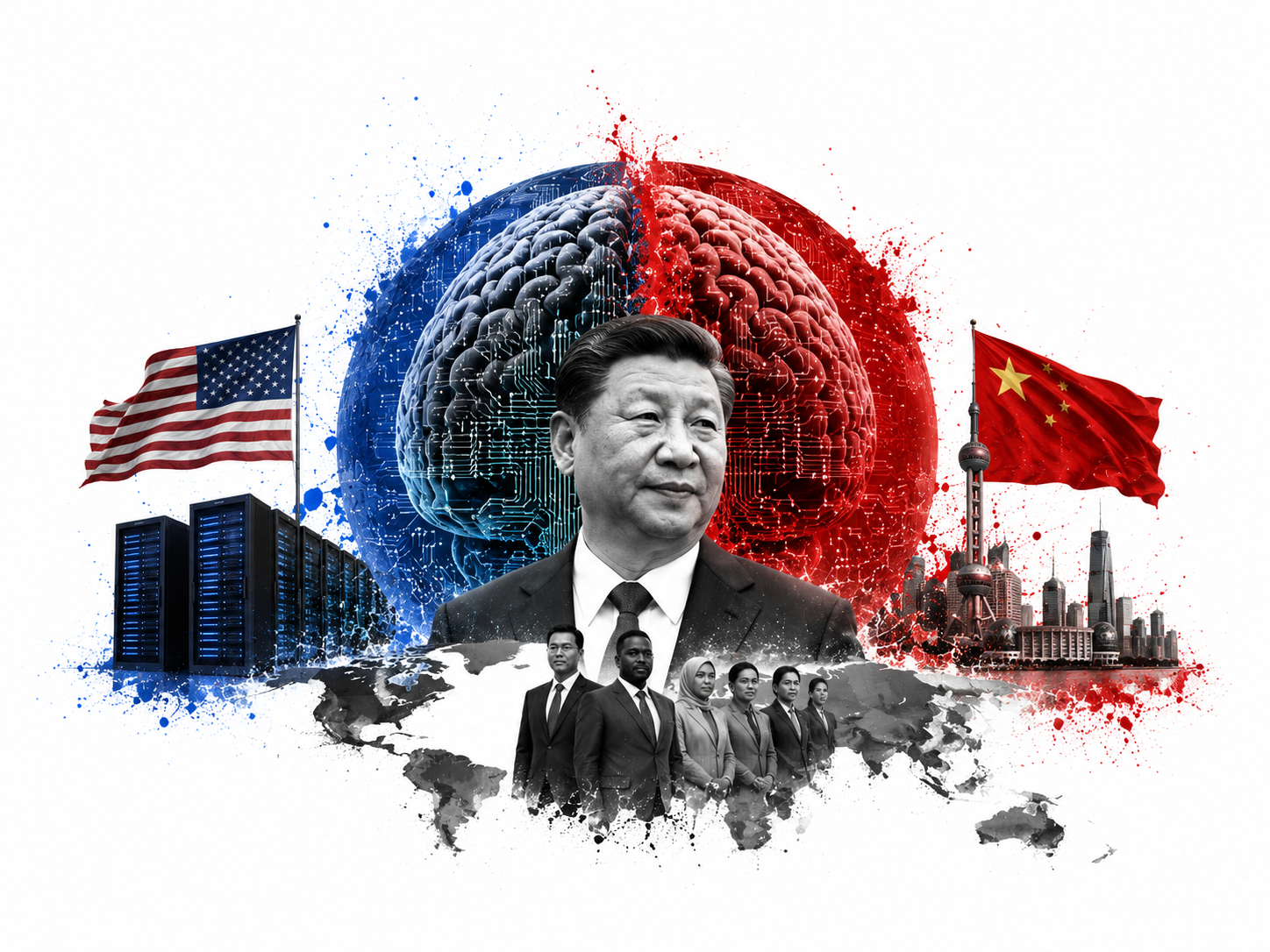
Chinese President Xi Jinping announced the creation of a global coalition on artificial intelligence at an international forum in Shanghai, which includes 29 countries, including Brazil, Indonesia, Russia, and Kazakhstan.
The main signal from Beijing is that the development of artificial intelligence should remain an international process, but at the same time be under strict regulatory control through monitoring and early warning systems.
Alternative Technological Center
Many analysts see a pragmatic geopolitical calculation in Xi Jinping's statement that "one string cannot play music."
In fact, China is officially forming an alternative technological bloc.
While the United States restricts the export of advanced microchips and tries to keep the latest artificial intelligence models within the Western technological space, Beijing offers Global South countries its own digital infrastructure and development model.
Struggle for the Rules of the Future
For China, it is critically important to gain access to a large external market that will provide vast data sets for training models and allow the development of algorithms outside the scope of American sanctions.
The initiative to create shared legislative norms and monitoring systems is not only a matter of security or control over the risks of artificial intelligence development.
At the same time, it is an attempt to cement its own leadership in shaping global rules for the use of future technologies so that the standards for the development and control of AI are not determined exclusively by Silicon Valley.
Two Digital Civilizations
The technological "iron curtain" is gradually taking on legal and institutional forms.
The creation of a new coalition may indicate a further division of the global artificial intelligence market into two major technological spaces. One will be oriented toward American standards and infrastructure, while the other will focus on the Chinese ecosystem.
If this trend deepens, the world may transition to the existence of two partially incompatible digital ecosystems, each developing on its own hardware platform, software, and state control mechanisms.

Read also