Zelensky Reveals Russia’s New Drone Tactics in Moldova and Putin’s Fear of Returning Soldiers

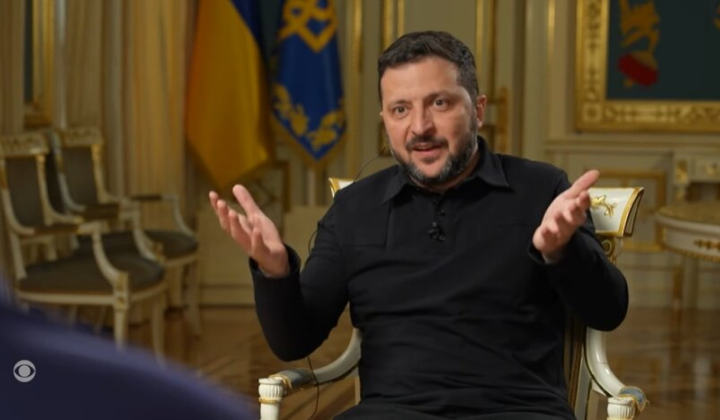
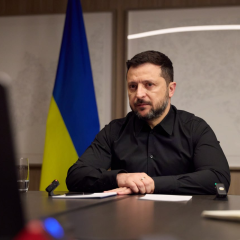
Exclusive Interview with Vladimir Zelensky on CBS News
According to ХВИЛЯ: In a detailed conversation with the American network CBS News, Ukrainian President Vladimir Zelensky shed light on Russia’s evolving military tactics, particularly the use of drones over Moldova’s airspace while his presidential plane was present. He explained that Russia has intensified drone launches during daylight hours, sending them every 30 minutes to two hours.
“From early morning, they send out drones-five, ten, even twenty at a time. For us, it’s not a major threat, but these waves every half hour or hour disrupt daily life,” Zelensky said, emphasizing the negative impact on children’s education.
Zelensky expressed serious concerns regarding Russian casualties, estimating that Russia could suffer up to 300,000 fatalities in 2023 alone, with total losses possibly reaching one million over five years of conflict. He also revealed Ukraine’s planned war expenditure for 2023 at 157 billion hryvnias, facing a budget deficit of 27 billion hryvnias, while Russia reportedly spends 300 billion hryvnias annually on the war effort.
The Ukrainian leader highlighted that Russian President Putin’s promises to seize Donbas within six months have not materialized. Moscow now expects the occupation to last between one and a half to two years, with recent forecasts extending the conflict as far as 2027.
“Putin pledged to take Donbas in six months,” Zelensky remarked, stressing that Ukraine has no intention of withdrawing troops from the region.
For Ukraine’s security, Zelensky identified NATO membership as a crucial guarantee, while EU accession would provide vital economic stability.
Prospects for Peace and Elections in Ukraine
Discussing the possibility of holding elections, Zelensky stated that a ceasefire lasting several months is essential: “Give us a few months of peace. During this time, we must find a way to end the war and organize elections.” He asserted that peace must take precedence over political maneuvering: “In wartime, peace is the top priority. Politics doesn’t even come second.”
On military aid, Zelensky noted that Ukraine’s receipt of advanced weaponry like Patriot missiles, F-16 fighters, and NASAMS systems has slowed due to U.S. focus on midterm elections and tensions involving Iran. Addressing drone incidents in Moldova, he clarified that only one or two drones were involved and no casualties occurred.
Regarding Putin’s mindset, Zelensky suggested that the Russian leadership understands that halting the war now would not equate to victory.
“If Putin stops at this stage, he fears angry soldiers will return and possibly turn against him,”
the president explained, highlighting the risk posed by frustrated troops returning from combat.
Zelensky also commented on CIA Director John Ratcliffe’s recent visit to Moscow, expressing skepticism about whether Russian authorities were aware of the American presence: “Maybe they didn’t know Americans were there, or maybe they did-I don’t trust them.” He reaffirmed Ukraine’s defensive stance, emphasizing, “We never strike first. Our defensive lines are the strongest in the country.”
This interview with Zelensky underscores the importance of closely monitoring shifts in Russia’s military strategies and provides insight into Ukraine’s internal challenges amid ongoing conflict. His remarks on expected casualties, war funding, and election prospects illustrate the complex nature of the crisis. The conversation also highlights the critical role of international alliances like NATO and the EU in securing Ukraine’s future stability and security.

Read also