How Red Sea Bacteria Generate Energy Without Oxygen, Leaving Metal Traces Behind

Exploring Life Beyond Oxygen: New Clues on Earth's Earliest Organisms
According to НВ — Техно: Scientists investigating deep, salty lakes on the floor of the Red Sea have uncovered extremophile bacteria that can produce energy in the complete absence of oxygen, leaving distinct metallic signatures in sedimentary layers. This groundbreaking finding sheds light on the origins of the earliest life forms on our planet, dating back to a time before oxygen and photosynthesis became widespread. Metagenomic studies revealed bacteria capable of manganese oxidation, suggesting an alternative energy-producing process that may have existed prior to the Great Oxygenation Event around 2.4 to 2.2 billion years ago.
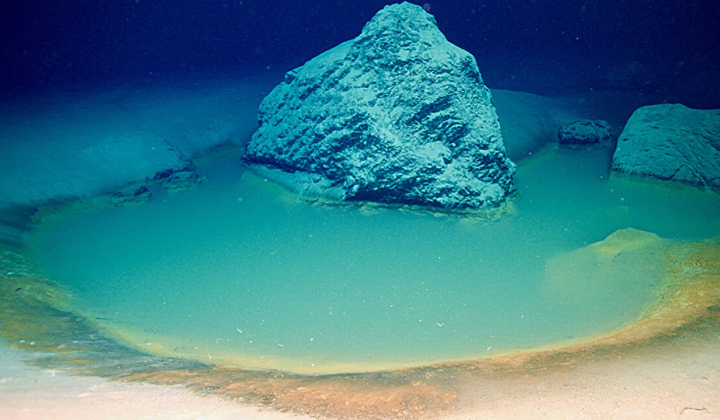
The research focused on deep hypersaline basins in the northern Red Sea, where an active salty basin lies approximately 1770 meters below sea level, and an ancient basin rests at about 1400 meters depth. These environments are characterized by oxygen depletion, high salinity, and complete darkness. Sediments from these zones are enriched with heavy metals like manganese, iron, molybdenum, and copper, with metal concentrations in some areas reaching up to 100 times those found on typical ocean floors.
Key Discoveries
Metagenomic analysis identified manganese-oxidizing bacteria, especially from the Nitrospira genus. The chemotrophic oxidation of iron and manganese likely served as an energy source for Earth's first living organisms. The findings, published in AGU Advances in 2026 under the leadership of Morgan Chakraborty, highlight how bacteria and archaea discovered during the expedition leave unique geochemical imprints in sediments that persist for millions of years.
The expedition also included sampling from the active basin, standard seafloor, and an abandoned mineral ring structure. This comprehensive study opens new avenues for understanding life's evolution and origins under conditions vastly different from those on Earth today.
Examining extremophiles thriving without oxygen offers critical insights into potential pathways for early life on Earth. Such knowledge not only enriches our planet's history but also informs the search for life in harsh environments on other planets and moons. This discovery underscores the importance of deep-sea ecosystems as natural laboratories for studying evolutionary processes that unfolded billions of years ago.
These discoveries in the Red Sea not only deepen our understanding of extremophiles but also parallel findings from other celestial bodies. For instance, the recent analysis of water-rock interactions in Jezero Crater on Mars reveals similar processes that could unveil the history of life beyond Earth. Such connections emphasize the importance of studying extreme environments, both terrestrial and extraterrestrial, to comprehend life's resilience.

Read also