Moon-Sized Protoplanet's Existence Confirmed by Meteorite Discovery

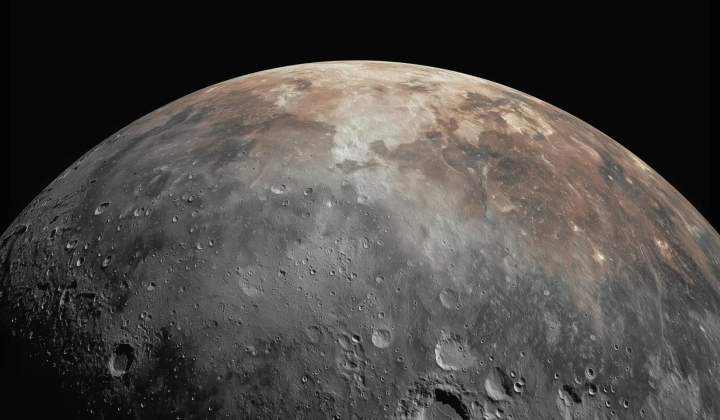
Rare Meteorite NWA 12774 Reveals Evidence of a Lost Protoplanet
According to НВ — Техно: A groundbreaking analysis of an unusual angrite meteorite, Northwest Africa (NWA) 12774, recovered from the Sahara Desert, has provided the first direct proof of a long-lost protoplanet. This meteorite contains a unique mineral-aluminum-rich clinopyroxene-which formed under immense pressure of 17.5 kilobars. Such conditions indicate that its parent body had a radius exceeding 1,800 kilometers, roughly the size of Earth's Moon.
Angrites rank among the oldest volcanic rocks in our solar system, having crystallized just a few million years after its formation. Previously, scientists believed these rocks originated from asteroids with radii under 200 kilometers. The discovery of this high-aluminum mineral in NWA 12774 challenges that assumption, opening new avenues for understanding planetary evolution.
New Research Horizons
Researchers speculate that this celestial body may have followed an independent evolutionary path. After a catastrophic collision, its fragments could have become incorporated into other rocky planets, including Earth. Out of over 80,000 known meteorites, only 68 are classified as angrites, making NWA 12774 exceptionally valuable for scientific study.
- Angrites are chemically distinct due to their very low silica (silicon dioxide) content.
- The study detailing these findings was published in the journal Earth and Planetary Science Letters.
- Scientists believe this meteorite could reshape our understanding of planet formation and planetary evolution.
This unique discovery, thoroughly described in a scientific journal, points to a type of planetary evolution never before documented by astronomers.
The conclusions from this research could significantly impact modern astronomy and planetary science, as they challenge existing theories about the origins of angrites and their link to small asteroids. Meteorite NWA 12774 may hold the key to understanding not only the evolution of our own solar system but also the processes shaping planets in other star systems.
This finding underscores the importance of studying meteorites as windows into the early stages of planetary body development.
This discovery raises intriguing questions about the formation of celestial bodies in our solar system. In a related study, researchers have uncovered evidence of a Martian-sized planet that once existed, providing further insights into the complexities of planetary evolution and the potential for similar findings in meteorite studies.

Read also