A Martian-Sized Lost Planet Revealed by Meteorite Fragment Found in the Sahara

Meteorite NWA 12774 Under the Microscope
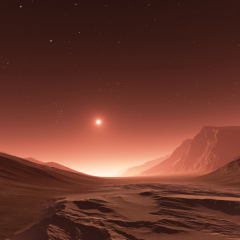
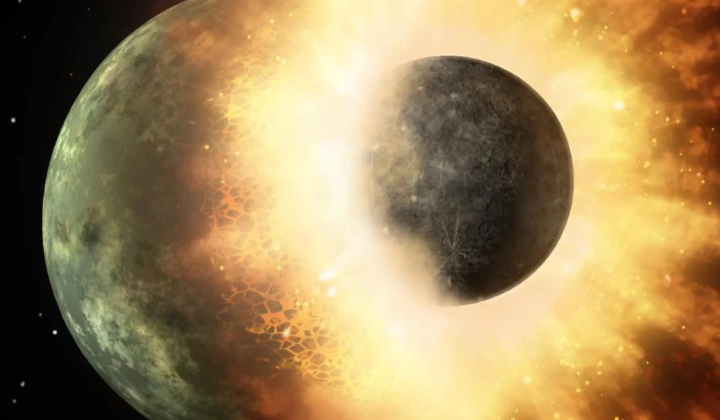
According to НВ — Техно: Discovered in the Sahara Desert in 2019, the NWA 12774 meteorite has enabled scientists to calculate the minimum radius of a long-vanished protoplanet (APB) at roughly 1,000 kilometers. Further analysis suggests the actual radius may have ranged from 1,800 to 3,300 kilometers-almost matching Mars, which measures 3,390 kilometers across.
Weighing about 500 grams, this meteorite belongs to the rare angrite group, which makes up only 0.09% of all meteorites ever found on Earth. Angrites are the oldest known igneous rocks, having formed just a few million years after the first solid materials condensed from the solar nebula. Examination of NWA 12774 revealed it contains aluminum-rich clinopyroxene crystals.
How Scientists Measured a Lost World
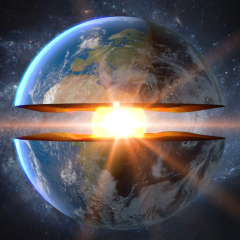
To determine the protoplanet's size, researchers employed electron microprobe analysis and high-resolution X-ray mapping. A custom geobarometric model reconstructed the extreme pressure conditions required to form those crystals. The findings indicate that the angrite parent body had a minimum radius of at least 1,000 kilometers, and its destruction may have been triggered by Jupiter's gravitational influence.
This study of NWA 12774 marks a significant advance in understanding the processes that shaped planets in the early solar system. Pinpointing the dimensions of this lost protoplanet can guide future research into planetary body evolution and their interactions with giant planets like Jupiter. The results also underscore the critical role rare meteorites play in unraveling the geological history of our solar system.
As researchers continue to explore the remnants of our solar system, the discovery of a ring beyond Jupiter's orbit reveals new insights into the formation of planetesimals. This finding complements the analysis of the NWA 12774 meteorite, highlighting the complex interactions between celestial bodies during the early stages of planetary development.

Read also