Feathered Dragon Discovered: New Bird Species Boasts a Tail Twice Its Body Length

A New Bird Species Uncovered
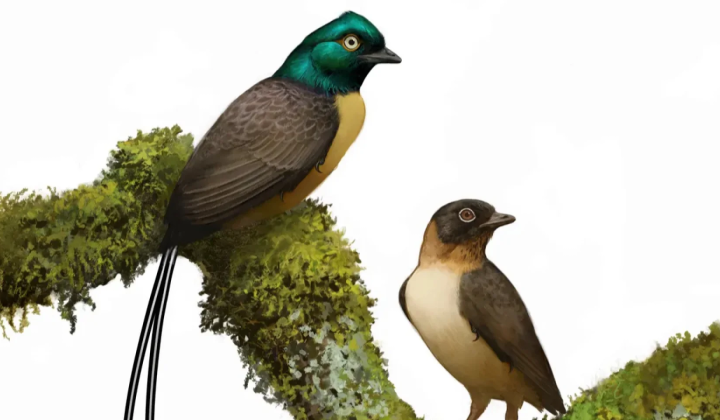
According to НВ — Техно: Scientists have identified a new species of ancient bird, named Plumadraco bankoorum, also referred to as the Banko feathered dragon. This creature belongs to the enantiornithine family, a group of birds that went extinct around 66 million years ago following an asteroid impact. Fossil remains of this bird reveal distinctive traits, most notably its exceptionally long tail feathers.
The body of Plumadraco bankoorum measured just 15 centimeters in length, while its tail feathers stretched an impressive 30 centimeters-meaning the plumage was twice as long as the body itself. The specimen was preserved in the Shandong Tianyu Museum of Nature. Its feathers were primarily dark brown or black, with the tail tips displaying an iridescent or bluish sheen, giving the bird a striking appearance.
Why This Discovery Matters
Researchers have noted that 'these are proportionally the longest tail feathers ever found in fossil bird remains.' Importantly, the feather structure ruled out any use for flight. This finding adds fresh insight into the diversity of ancient birds and how they adapted to their environments. The study was published in the scientific journal PLOS One, underscoring the significance and novelty of this discovery for the scientific community.
The identification of Plumadraco bankoorum highlights the critical role of paleontological research in expanding our understanding of prehistoric ecosystems and their inhabitants. Studying species like the Banko feathered dragon helps scientists grasp evolutionary processes and adaptations that occurred millions of years ago, as well as the impact of global catastrophes like the asteroid strike. This discovery may also inspire further research in paleontology and evolutionary biology.
This fascinating discovery of the ancient sea creature Tylosaurus rex in Texas further emphasizes the rich diversity of prehistoric life. Just as the feathered dragon unveils new aspects of avian evolution, the Tylosaurus rex adds to our understanding of marine ecosystems from the same era. Both findings highlight the importance of paleontological research in piecing together the history of life on Earth.

Read also